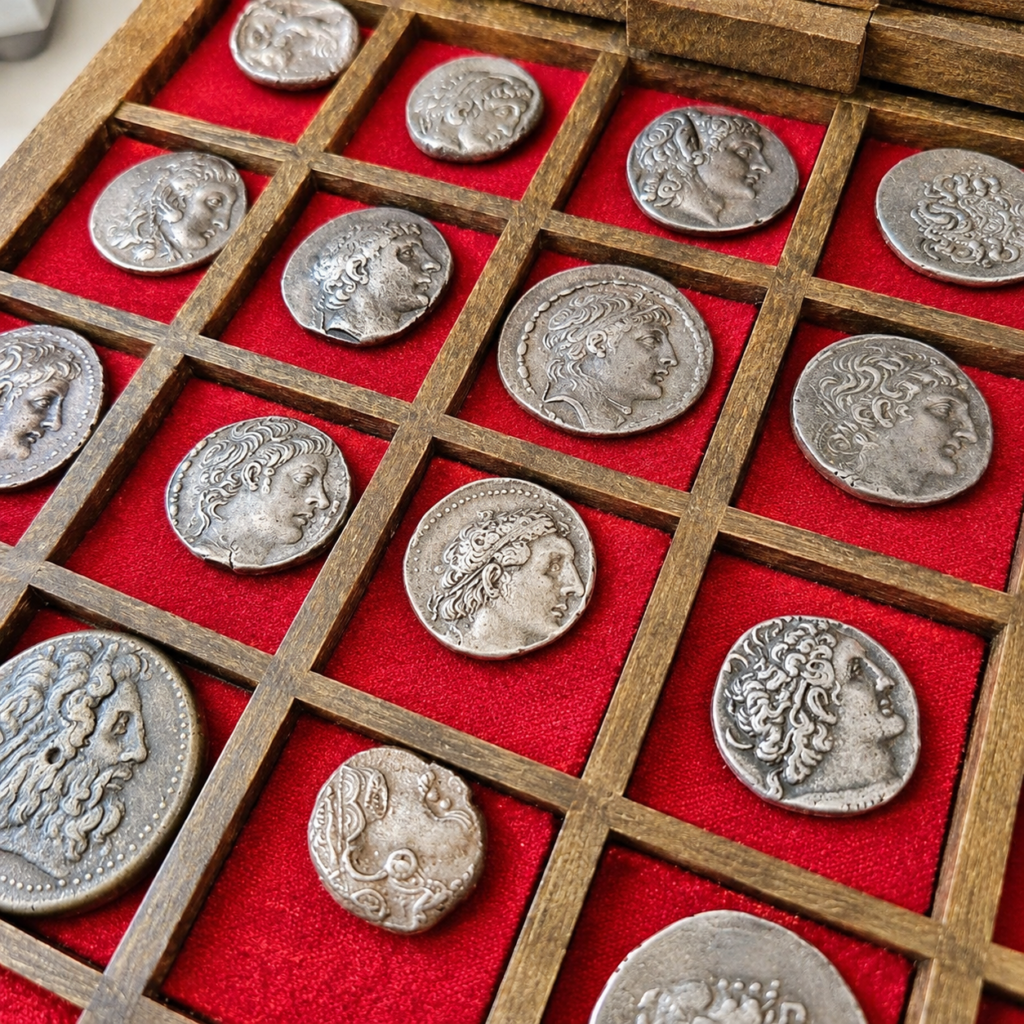
London – UK
Ancient coins are far more than pieces of precious metal. They are tangible witnesses to lost civilisations, imperial dynasties, historic trade routes and the political and cultural achievements of humanity. From Roman gold aurei and Byzantine solidi to Persian Sassanian drachms, ancient Greek silver tetradrachms and Islamic gold dinars, every surviving coin carries a historical identity that deserves careful protection. For private investors and owners of historical treasures, preserving an ancient coin collection is not simply about maintaining its appearance; it is about protecting its authenticity, historical integrity, physical condition and long-term desirability.
But how should a private owner preserve ancient gold, silver, bronze and copper coins? What environmental conditions are appropriate? Should ancient coins ever be cleaned? Which storage materials are safe? And how can an investor protect the financial and historical value of a valuable numismatic collection? This comprehensive question-and-answer guide explains the essential principles of ancient coin preservation, drawing on established museum conservation practices and professional numismatic recommendations.
Ancient coins have survived centuries, and sometimes millennia, of circulation, burial, transportation and environmental exposure. Despite their apparent durability, their surfaces can be extremely vulnerable to chemical reactions, atmospheric pollutants, moisture, fingerprints and mechanical damage.
Proper preservation prevents unnecessary deterioration and helps retain the original metal surface, inscriptions, portrait details, mint marks and historical patina. These characteristics are particularly important when assessing ancient Roman coins, Greek silver coinage, Byzantine gold coins, Sassanian Persian drachms, medieval Islamic dirhams and other historical monetary artefacts.
For investors, preservation is also an important consideration when assessing marketability. A coin with an undisturbed original surface and attractive natural patina may be more desirable than an example that has been polished, scratched or improperly cleaned. Preserving the original condition is therefore an essential responsibility of every private owner.
The most common threats include excessive humidity, fluctuating temperatures, airborne pollutants, inappropriate storage materials, direct contact with human skin, physical abrasion and improper cleaning.
Silver coins can develop tarnish through reactions with sulphur-containing compounds. Copper and bronze coins can experience corrosion, sometimes appearing as green deposits or powdery material. Iron coins are particularly vulnerable to moisture and oxidation, while gold is generally more chemically stable but can still suffer mechanical damage, surface contamination and abrasion.
One particularly important distinction is between natural patina and active corrosion. Natural patina can be an attractive and historically meaningful feature of an ancient coin. Active corrosion, however, may progressively damage the underlying metal. Powdering, flaking, expanding deposits or recurring green corrosion on copper alloys should be treated as warning signs requiring professional assessment.
Yes and No. As a general preservation rule, ancient coins should never be polished or cleaned simply to make them appear brighter.
Aggressive cleaning can permanently damage delicate surfaces, remove original patina, flatten raised details and introduce microscopic scratches. Abrasive materials, silver polish, household detergents, acids, commercial metal cleaners and ultrasonic cleaning devices should not be used on valuable ancient coins.
If a coin displays potentially harmful deposits or active corrosion, consult a qualified metals conservator or experienced conservation specialist before attempting any treatment. Preventive preservation is preferable to restoration.
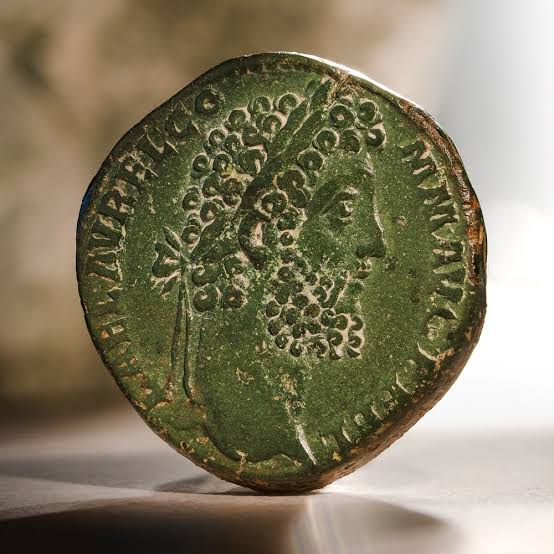
Natural patina is a surface layer that develops through chemical interaction between a metal and its environment over time. Depending on the metal, it can produce brown, grey, green, black or other characteristic colours. On ancient bronze and copper coins, natural patina can contribute significantly to their historical appearance.
Tarnish is a surface discolouration caused by chemical reactions, particularly noticeable on silver. It does not necessarily indicate structural damage.
Active corrosion is more serious. It can involve the deterioration of the underlying metal and may present as powdering, flaking, bubbling or unstable deposits. Understanding these differences is essential because removing a natural patina can cause irreversible damage.
The safest approach is to store every coin individually in a purpose-designed, chemically stable holder.
Suitable options include archival-quality capsules and holders manufactured from inert materials such as polyethylene, polypropylene, polystyrene and polyester (Mylar). These materials are widely used in museum and conservation environments.
Individual storage prevents coins from rubbing against each other, reduces accidental contact and limits exposure to dust and environmental contaminants.
For particularly valuable ancient coins, professionally graded and sealed holders can provide additional physical protection. However, encapsulation should be undertaken by a reputable grading service, and the coin should not be removed from an existing certified holder merely for aesthetic reasons.
Polyvinyl chloride (PVC) is one of the most important materials to avoid in long-term coin storage.
Some flexible PVC holders contain plasticisers that can migrate onto the coin’s surface over time. This can produce sticky green deposits commonly referred to as PVC residue or green slime. Copper and copper-containing silver alloys are particularly vulnerable.
For this reason, private coin collections should use explicitly labelled PVC-free, archival-quality storage products.
Owners should periodically inspect existing holders for signs of deterioration, including cloudiness, stickiness, discolouration and brittleness.
A cool, stable and relatively dry environment is preferable for most ancient metal coins.
The Canadian Conservation Institute recommends relative humidity of approximately 35–55% for stable metal objects stored with mixed collections, while noting that lower humidity can offer additional protection against corrosion where practical.
Avoid sudden changes in temperature and humidity. Condensation is particularly dangerous because moisture can accumulate on metal surfaces and accelerate corrosion.
A digital hygrometer is a useful investment for monitoring the storage environment. Private owners should aim for consistency rather than repeatedly exposing coins to different climatic conditions.
Basements, bathrooms, kitchens, attics and garages are generally unsuitable locations because they often experience excessive humidity or temperature fluctuations.
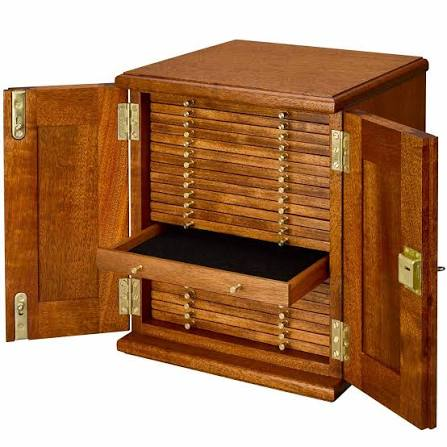
Traditional wooden coin cabinets can look attractive, but they are not always appropriate for long-term preservation.
Certain woods, particularly oak, and some adhesives, varnishes and finishes can release acidic or corrosive vapours. These emissions may affect sensitive metal surfaces over time.
For valuable collections, purpose-designed metal cabinets or storage systems made from stable, inert materials are generally preferable.
If a wooden cabinet is already being used, ensure that coins are isolated from potentially harmful materials and that the cabinet has been assessed for suitable long-term storage.
Yes. Silica gel can help control moisture within an enclosed storage environment.
It is particularly useful in cabinets, display cases and storage containers where humidity needs to be reduced or stabilised. However, silica gel must be monitored and maintained because its moisture-absorbing capacity is limited.
It should not be placed directly against coins. Instead, use an appropriate separate compartment or enclosed humidity-control system.
The objective is to create a stable microenvironment rather than excessively drying every object without considering its material and condition.
Ancient coins should be handled as little as reasonably possible.
When examination is necessary, work over a clean, soft, padded surface. WEAR GLOVES and hold the coin gently by its edges, avoiding direct contact with the obverse and reverse.
Clean, dry hands are important. Well-fitting, clean gloves can provide additional protection, provided they do not compromise grip or dexterity. Avoid loose gloves that could cause a coin to slip or be dropped.
Never hold coins over hard floors, stone surfaces or exposed workbenches. Even a relatively short fall can cause edge damage, scratches or fractures.
A valuable collection should be inspected periodically, ideally every few months, with more frequent checks where environmental conditions or the coins’ condition justify them.
Look for changes in surface colour, unusual deposits, moisture, deterioration of holders and signs of corrosion.
Pay particular attention to ancient bronze and copper coins, as certain forms of corrosion can become progressive if not identified early.
An inspection record should include the date, coin identification, holder condition and any changes observed. Photographs taken under consistent lighting can help identify subtle developments over time.
Different metals require slightly different preservation considerations.
Gold coins: Gold is generally resistant to corrosion, making ancient gold aurei, solidi, dinars and other gold denominations relatively stable. Nevertheless, their surfaces can be scratched, abraded or damaged by careless handling. Avoid polishing and unnecessary contact.
Silver coins: Ancient Roman denarii, Greek tetradrachms, Byzantine silver issues and Islamic silver dirhams should be protected from moisture, sulphur-containing pollutants and inappropriate storage materials. Natural toning should generally be preserved.
Bronze and copper coins: These require particular attention because corrosion can become active and progressively damage the metal. Watch for powdery green deposits, flaking and unstable surfaces. Seek professional conservation advice when these signs appear.
Electrum and other historical alloys: Mixed-metal coins can have distinctive chemical and physical characteristics. Their preservation requirements should be assessed according to their composition and condition.
Yes, provided the display environment is suitable.
A well-designed display can allow owners to appreciate the historical significance of their collection while protecting the coins from unnecessary handling.
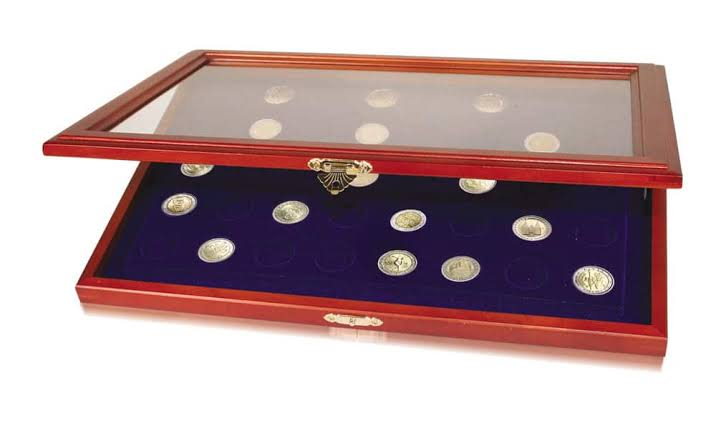
Use secure display cases with stable materials, appropriate individual holders and protection against dust and accidental contact.
Avoid placing valuable ancient coins in direct sunlight, near radiators, fireplaces, air-conditioning outlets or areas exposed to frequent temperature changes.
For high-value collections, consider secure, lockable display cabinets with controlled environmental conditions.
Provenance refers to the documented ownership and historical record of an artefact.
For ancient coins, provenance may include previous auction appearances, published collection references, dealer invoices, certificates, historical inventories and other reliable ownership documentation.
Maintaining accurate provenance records is important for establishing an item’s ownership history and supporting responsible future transactions.
Private owners should retain original invoices, auction catalogues, certificates of authenticity, grading reports and relevant correspondence. Where available, record previous auction houses, sale dates and lot numbers.
A documented provenance history can also help distinguish a well-documented historical object from an item with an uncertain ownership background.
Every coin should have an individual digital and physical record.
A comprehensive record should ideally include:
High-resolution photographs are particularly useful. They help establish the coin’s identifying characteristics and document its condition at a particular point in time.
Digital records should be backed up securely, with access restricted where necessary.
Ancient coins are small, portable and often valuable. Security should therefore be treated as an essential element of collection management.
Use a high-quality safe or secure storage cabinet, restrict access and avoid publicly disclosing the location of valuable holdings.
For substantial collections, consider professional security arrangements, appropriate alarm systems and comprehensive insurance.
Maintain a photographic inventory and record identifying features, certification numbers and provenance documents. These records can assist with insurance claims and recovery efforts in the event of theft.
Yes. Significant private collections should be appropriately insured.
Owners should speak with an insurer experienced in antiques, collectibles, precious metals or fine art. The policy should accurately reflect the nature of the collection, including its historical and numismatic value.
Keep invoices, independent valuations, grading certificates and photographs updated. Insurance coverage should be reviewed periodically, particularly when new acquisitions are made or market conditions change.
Do not assume that a standard household insurance policy automatically provides adequate protection for rare ancient coins.
Transporting ancient coins requires careful packaging and protection against movement, impact and environmental exposure.
Each coin should remain in an appropriate individual holder. Coins should never be allowed to move freely against each other inside a parcel.
Use protective outer packaging, cushioning and secure containers. For valuable acquisitions, use an insured and appropriately tracked delivery service.
International shipments should also comply with applicable customs requirements, cultural property laws and export or import regulations.
The most successful private collections are managed through consistency, documentation and preventive conservation.
Owners should prioritise suitable storage, stable environmental conditions, careful handling, regular inspection and professional advice when necessary.
It is equally important to understand that an ancient coin is not simply a financial asset. It is a historical object whose original surface, inscriptions, manufacture and accumulated history contribute to its identity.
Responsible ownership means preserving these characteristics for future generations rather than attempting to make every acquisition look newly minted.
Preserve the original condition. Avoid unnecessary intervention. Document everything.
This principle applies equally to Roman gold aurei, Byzantine solidi, ancient Greek silver tetradrachms, Sassanian Persian drachms, Umayyad gold dinars, Abbasid silver dirhams and medieval Islamic coinage.
The objective is not to make an ancient coin look new. It is to ensure that its historical character, physical integrity and documented identity survive for generations.
A private collection of ancient coins represents a remarkable connection with the history of civilisation. Every Roman emperor, Byzantine ruler, Persian king, Islamic caliph and medieval monarch who issued coinage left behind a physical record of political authority, economic development and cultural identity.
Preserving these historical treasures requires more than acquiring rare specimens. It requires knowledge, discipline and a commitment to responsible ownership. Appropriate storage, controlled environmental conditions, careful handling, professional conservation and accurate provenance records are the foundations of a well-maintained numismatic collection.
For private investors, the preservation of ancient coins is ultimately an investment in historical continuity. A coin that has survived centuries deserves to be protected with the same respect and attention that allowed it to endure.
House of Emirates® — London — Where Eternity Becomes a Luxury Asset.
===========