Description
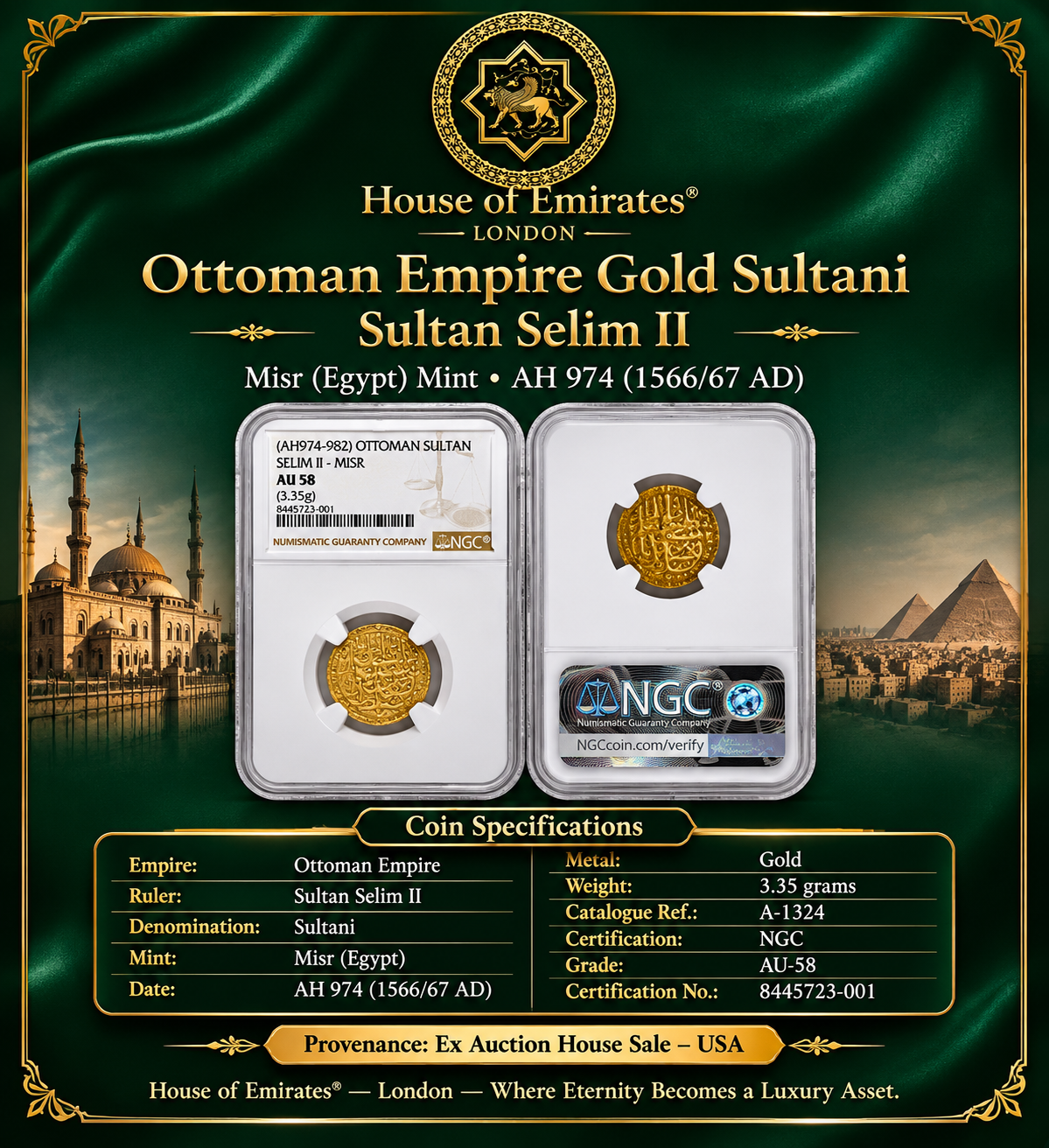
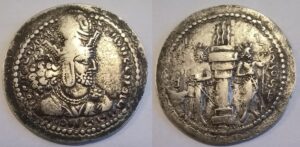
Ottoman Empire Gold Sultani of Sultan Selim II – AH 974 (1566/67 AD)
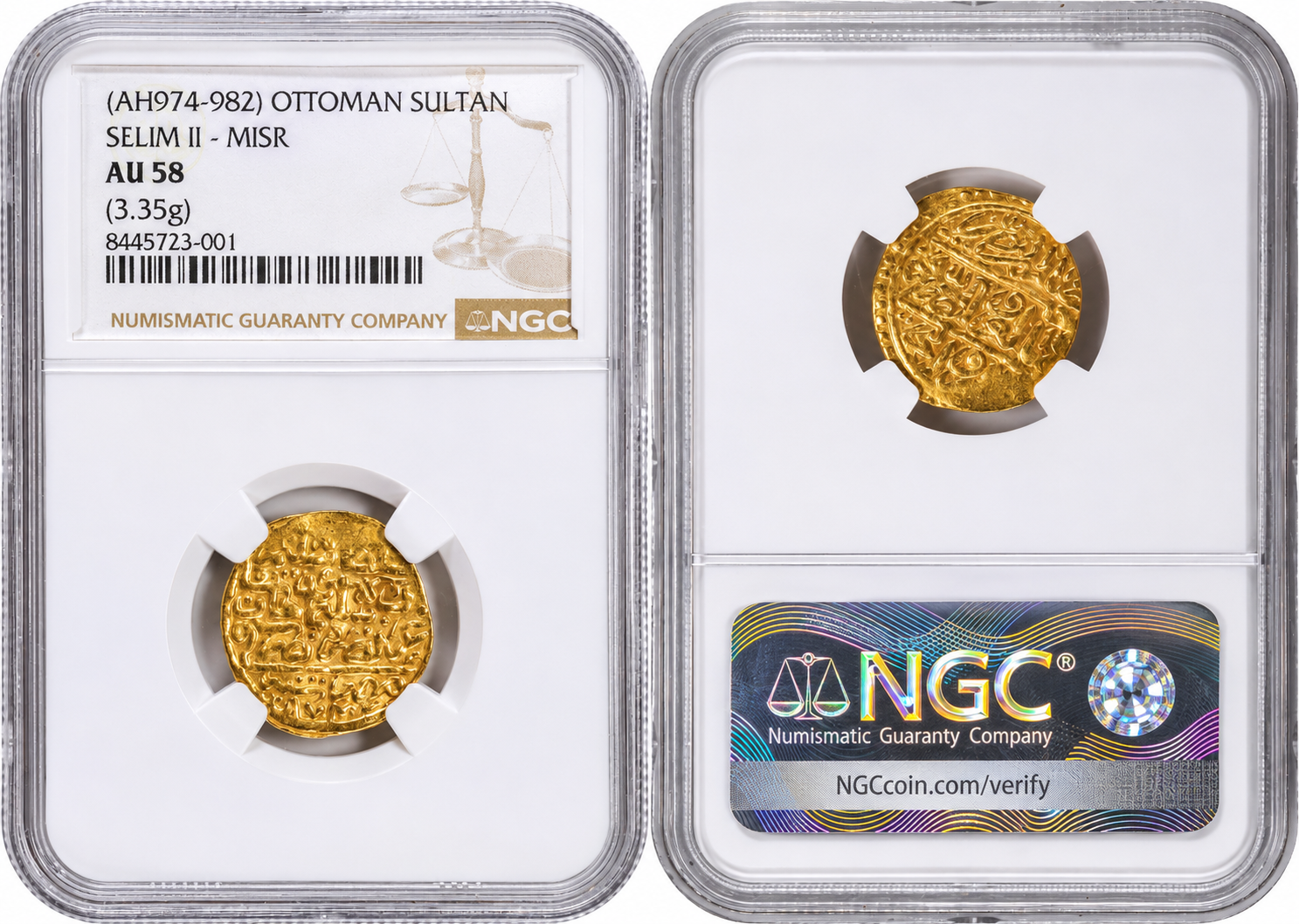
Misr Mint, Egypt | Graded: NGC AU-58
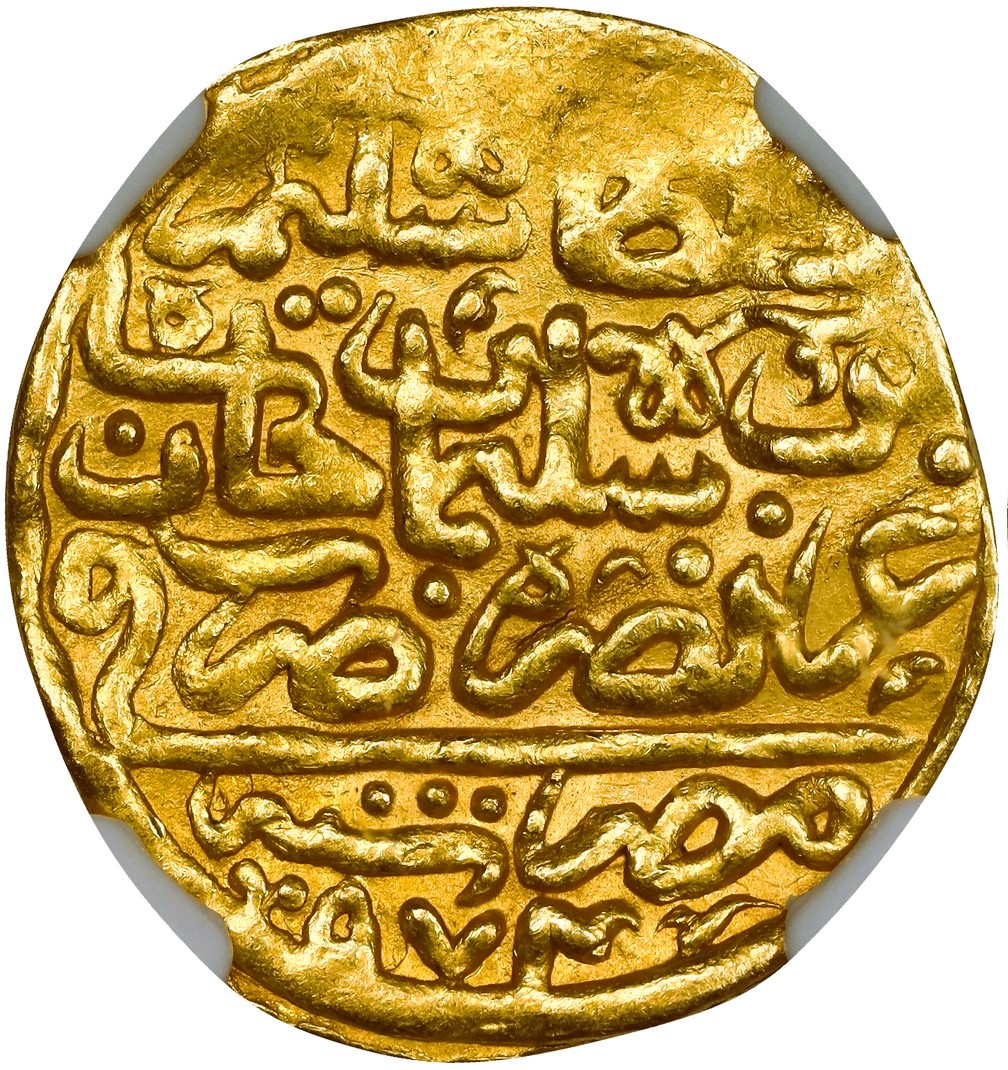
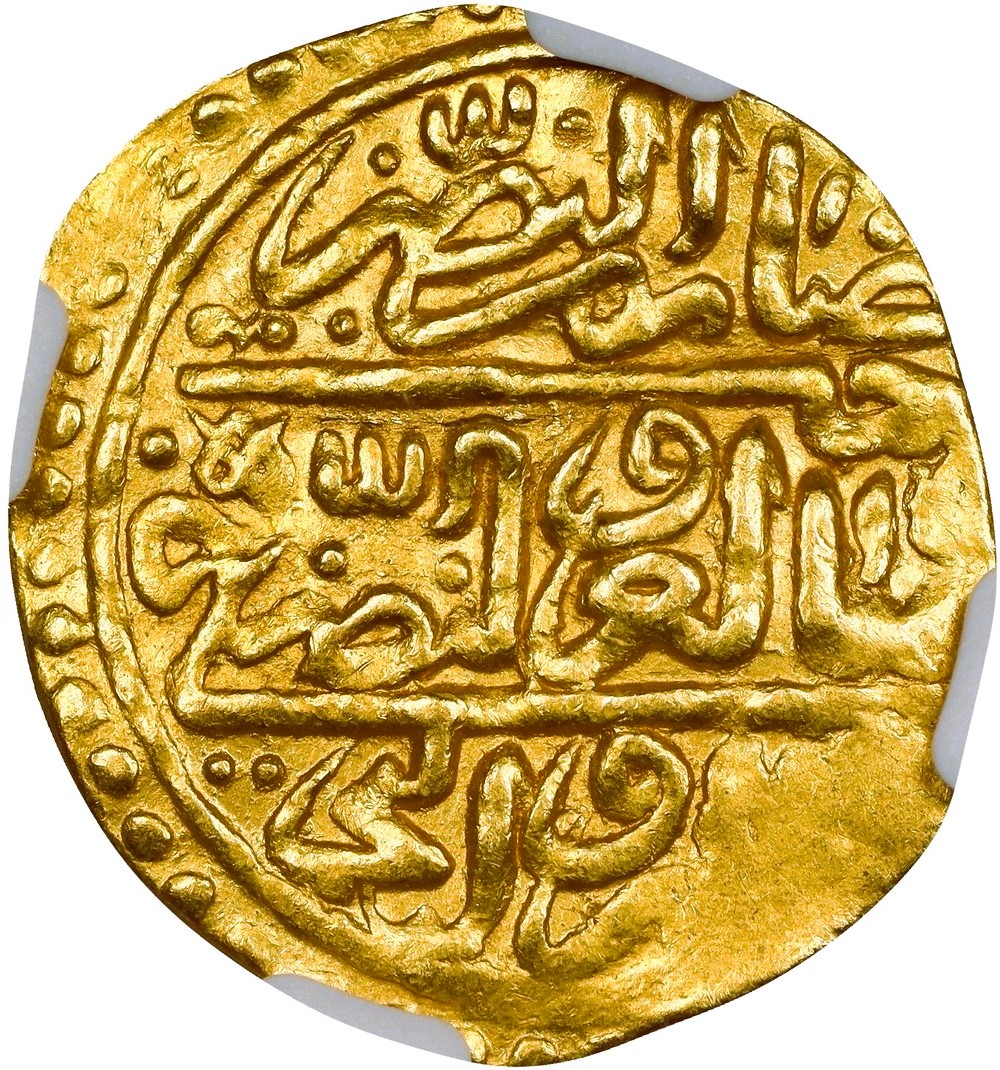
House of Emirates® in London is thrilled to offer its elite clientele this majestic Ottoman imperial gold Sultani, struck in 974 AH (1566/67 AD) at the historic Misr Mint in Egypt during the reign of Sultan Selim II (1566–1574 AD). Representing a remarkable chapter in the monetary and political history of the Ottoman Empire, this magnificent gold ottoman coin embodies the authority, prestige and enduring legacy of one of the most influential imperial dynasties in world history.
Graded AU-58 by the US Numismatic Guaranty Company (NGC), with 20 mm in diameter and 3.35 g of high purity gold, this specimen combines historical importance, precious-metal appeal and certified preservation, making it an exceptional acquisition for discerning investors in historical gold coins and distinguished Islamic numismatic treasures.
Provenance – Ex Auction House Sale, USA
This distinguished Ottoman gold Sultani carries an established renowned US auction-house provenance, having previously been offered through an auction house in the United States. Its recorded auction history adds an additional dimension to the coin’s documented ownership background and provides valuable context for its presentation to the international numismatic market.
The Imperial Legacy of Sultan Selim II
Sultan Selim II ascended the Ottoman throne in 1566 AD, succeeding his illustrious father, Sultan Suleiman I, known to history as Suleiman the Magnificent. His reign continued during a period when the Ottoman Empire maintained its position as one of the world’s foremost political, military and economic powers. Its territories extended across Southeast Europe, Western Asia and North Africa, with Egypt serving as a strategically important province.
Egypt had been incorporated into the Ottoman Empire in 1517 AD following Sultan Selim I’s conquest of the Mamluk Sultanate. The historic Misr Mint subsequently formed part of the imperial monetary network, producing gold coinage that reflected Ottoman sovereignty and facilitated commerce throughout the region. This Sultani, dated AH 974 (1566/67 AD), is therefore a tangible witness to Ottoman imperial administration in Egypt and the circulation of gold currency during the 16th century.
The Ottoman Gold Sultani – A Symbol of Imperial Wealth
The Ottoman Gold Sultani was among the distinguished gold denominations associated with Ottoman monetary history. Its precious-metal composition and imperial inscriptions represented the authority of the ruling sultan and the monetary traditions of the empire.
Struck in the name of Sultan Selim II at the Misr Mint, this Egyptian gold Sultani offers a fascinating connection between Ottoman imperial power and the historical economic landscape of Egypt. Its Arabic inscriptions, traditional Islamic calligraphy and historic mint attribution make it particularly compelling as a surviving artefact of 16th-century Ottoman monetary heritage.
A Distinguished Historical Acquisition
This Ottoman gold Sultani is more than a precious-metal object. It represents an enduring connection to the Ottoman dynasty, the historical importance of Egypt and the monetary traditions of the Islamic world. Its documented reign, AH dating, Egyptian mint attribution and recognised NGC certification combine to create a compelling historical investment proposition.
With its association with Sultan Selim II and the Misr Mint, this specimen offers an opportunity to own an authentic piece of Ottoman history dating back more than four and a half centuries.
House of Emirates® — London — Where Eternity Becomes a Luxury Asset.