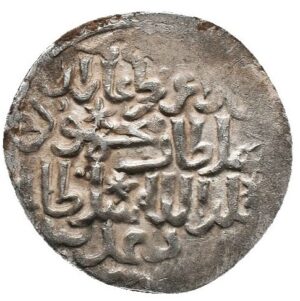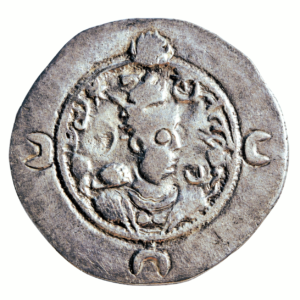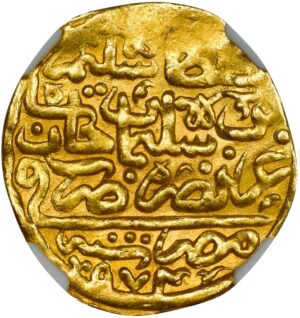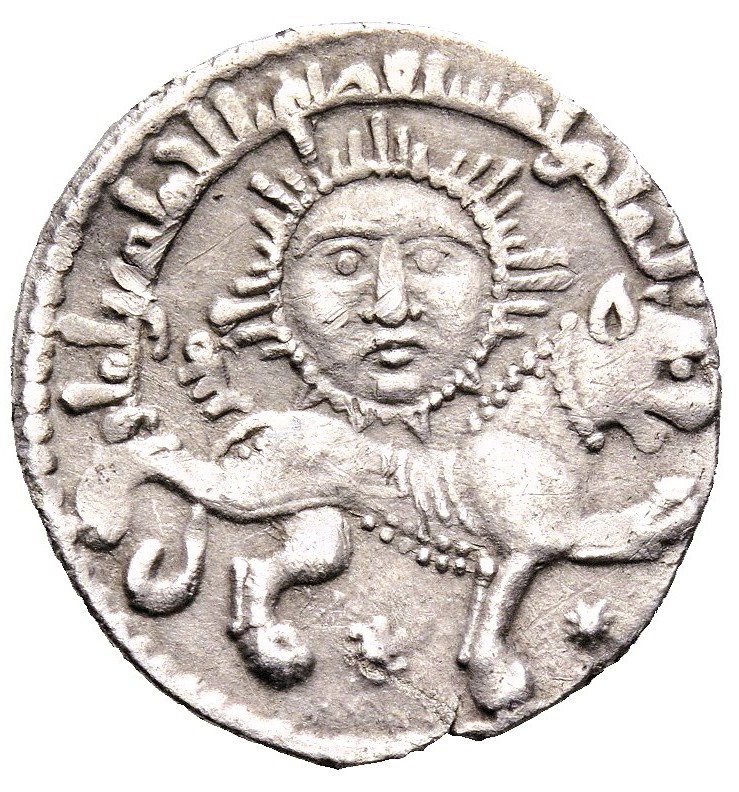
A remarkable silver coin from the thirteenth-century Seljuq Sultanate of Rum, where Islamic dynastic authority, Persian symbolism and Georgian royal history converge.
Among the most fascinating treasures of medieval Islamic numismatics is the extraordinary Lion and Sun silver dirham of the Seljuqs of Rum, issued during the reign of Sultan Ghiyath al-Din Kaykhusraw II (1237–1246 AD). Struck in the thirteenth century, this remarkable coin is far more than an instrument of monetary exchange. It is a miniature historical document, carrying within its imagery the political ambitions, cultural influences, royal relationships and artistic sophistication of one of medieval Anatolia’s most influential dynasties.
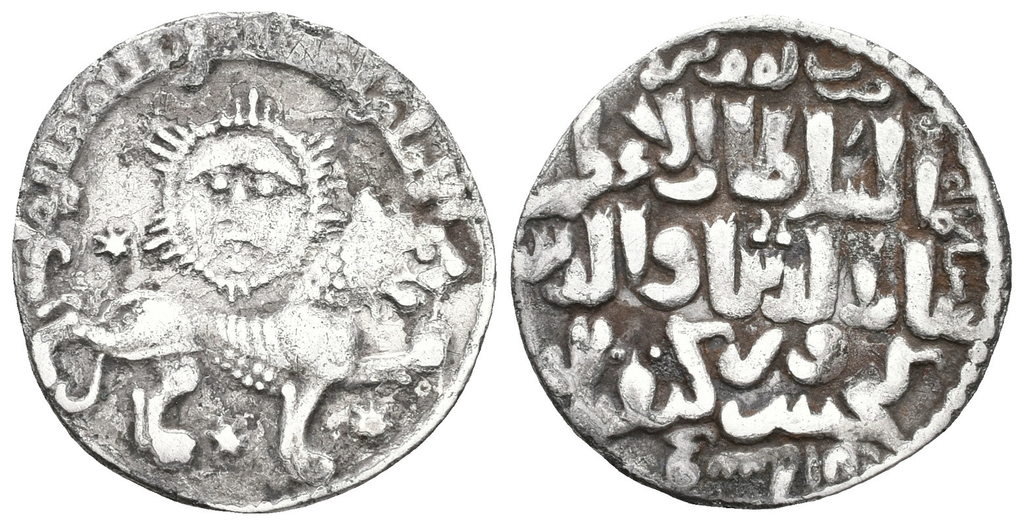
The coin is particularly distinguished by its unusual obverse design: a powerful walking lion beneath a radiant sun, accompanied on certain issues by stars. Its reverse carries Arabic inscriptions identifying the Sultan, his royal titles, the Abbasid caliph and, depending on the issue, the mint and year of production. These inscriptions establish the coin’s historical identity, while its extraordinary imagery invites a deeper interpretation of the political and cultural world in which it was created.
The Seljuqs of Rum, whose name derives from the Arabic and Persian expression for Rome, established their power in Anatolia following the Seljuq victory at the Battle of Manzikert in 1071 AD and the subsequent expansion of Turkish political authority into former Byzantine territories. Their sultanate developed into a sophisticated centre of commerce, architecture, scholarship and artistic patronage, connecting the Mediterranean world with Persia, the Caucasus, Central Asia and the wider Islamic territories. Their capital, Konya, became an important centre of political and cultural life, while commercial cities such as Sivas and Kayseri flourished along major trading routes. The Sultanate of Rum was consequently a meeting point of civilisations, where Persian artistic traditions, Turkish political institutions, Byzantine influences and Christian communities existed in a complex and interconnected environment.
Sultan Kaykhusraw II inherited a powerful but increasingly complicated political landscape. His reign witnessed considerable cultural activity, but also internal unrest and the growing pressure of Mongol expansion. Around 1239–1240 AD, his coinage introduced one of the most distinctive figurative designs in medieval Islamic numismatics: the lion and sun motif.
Seljuq Silver dirhams bearing this design were struck principally at Sivas and Konya between approximately 1239 and 1243 AD, with dated examples belonging to the Hijri years 637–641 AH. These coins are particularly important because figurative representations were not universally employed in Islamic monetary traditions. The decision to place a living creature and a celestial symbol on an official silver currency therefore gives the design considerable historical and artistic significance.
The lion was an ancient emblem of strength, courage, sovereignty and royal authority. Across Persian and wider Near Eastern traditions, the animal had long been associated with kingship, military power and the protection of the realm. The sun, meanwhile, represented illumination, celestial authority, life and cosmic order. Together, these two symbols created an exceptionally powerful visual composition: a lion beneath the radiance of the sun.
Yet the significance of this design may extend beyond conventional royal symbolism.
One of the most captivating historical interpretations of the Lion and Sun dirham concerns the Georgian royal woman who became the wife of Sultan Kaykhusraw II.
Her name was Tamar, also known as Gürcü Hatun, meaning the Georgian Lady. She was the daughter of Queen Rusudan of Georgia and a niece of the celebrated Georgian monarch Queen Tamar the Great (reigned 1184–1213 AD). It is important to distinguish the two women: Queen Tamar the Great was her aunt, not the wife of the Seljuq Sultan.
The marriage between Tamar and Kaykhusraw II brought together two powerful royal traditions, Georgian Christianity and the Muslim Seljuq court of Anatolia. Tamar became an influential personality within the Sultan’s court, and her position demonstrates the importance of dynastic marriages in medieval diplomacy, particularly between neighbouring Christian and Muslim powers.
According to the thirteenth-century Syriac historian Bar Hebraeus, Kaykhusraw was deeply attached to his Georgian wife and wished to commemorate her on his coinage. The account relates that he was advised to employ a symbolic representation rather than a direct portrait, resulting in the lion and sun composition. This fascinating narrative has become one of the most frequently repeated explanations for the coin’s unusual imagery.
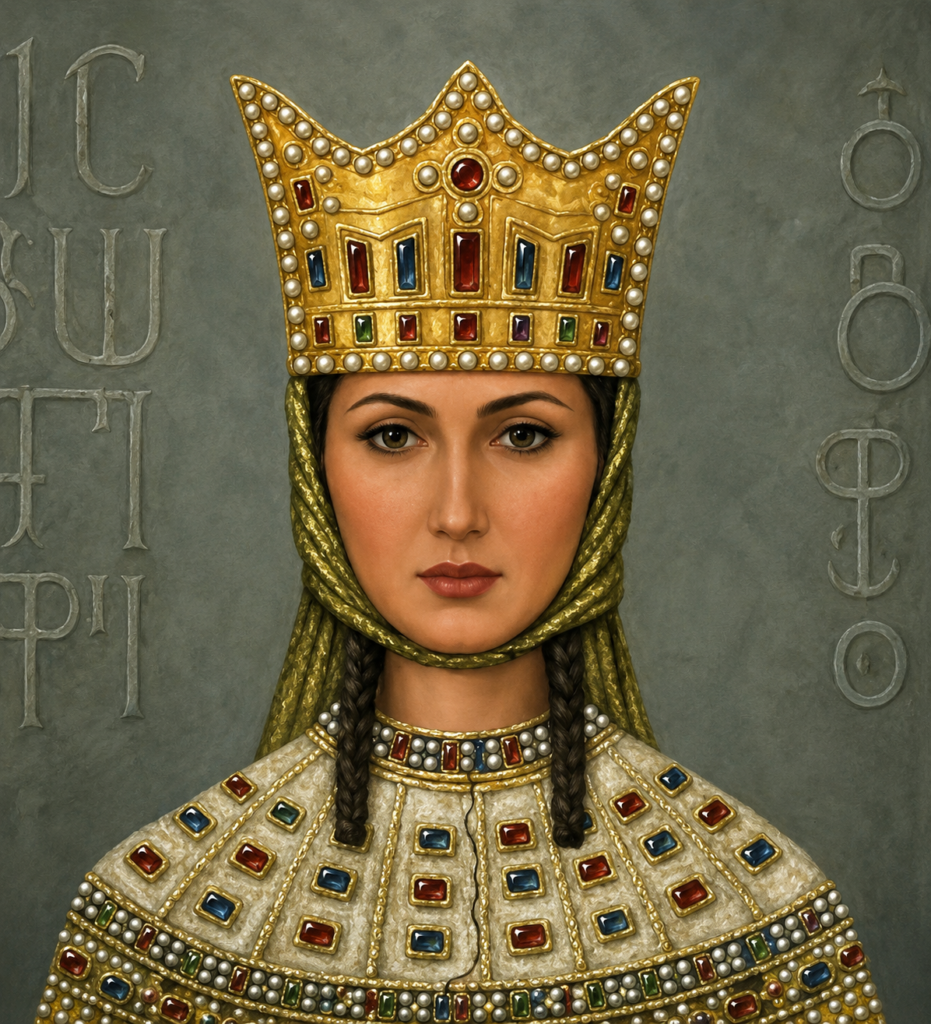
Could the lion have represented the Sultan, while the radiant sun symbolised his beloved Georgian wife?
It is an interpretation that gives the coin an extraordinary human dimension. The lion, representing masculine royal authority, stands beneath the brilliance of the sun, potentially representing Tamar’s beauty, influence and elevated position within the Seljuq court. In this reading, the coin becomes not simply an expression of political sovereignty, but also a symbolic tribute to a royal marriage that connected two distinct civilisations.
However, historical scholarship requires an important qualification. The romantic explanation is not universally accepted. An alternative interpretation associates the lion and sun with astrology, particularly the zodiacal sign Leo and the Sultan’s horoscope or ascendant. The lion beneath the sun may therefore represent a celestial configuration connected with the ruler himself rather than a portrait of his wife. Some scholars have also interpreted the composition as a conventional emblem of kingship, combining ancient symbols of sovereignty.
The Metropolitan Museum of Art’s publication Court and Cosmos: The Great Age of the Seljuks discusses the account of Bar Hebraeus, while numismatic research has examined the astrological and political meanings of the device. The precise intention behind the design remains a subject of scholarly discussion.
What makes the coin particularly compelling is precisely this intersection of documented history and competing interpretations. Whether the sun represents Tamar, the Sultan’s celestial destiny or a broader expression of royal authority, the imagery captures the sophisticated symbolic language of medieval Anatolia.
The lion and sun motif did not originate exclusively with Kaykhusraw II. Both symbols had much older roots in the artistic and political traditions of the ancient Near East and Persia. Their combination, however, acquired particular prominence in later Iranian heraldic and political culture, eventually becoming one of the most recognisable emblems associated with Persia.
On the Seljuq silver dirham, the composition can be understood through several complementary dimensions.
Royal power: The lion expresses sovereignty, courage, military strength and the authority of the Sultan.
Celestial authority: The sun represents cosmic order, radiance, illumination and the relationship between earthly kingship and the heavens.
Astrological symbolism: The arrangement may reflect medieval beliefs concerning zodiacal signs, planetary influences and the ruler’s horoscope.
Dynastic and personal symbolism: The interpretation connecting the sun with Tamar introduces a fascinating possibility that the imagery also commemorated a royal relationship.
The combination of these elements makes the coin an exceptional example of medieval Islamic visual culture, in which political authority, artistic expression and cosmological beliefs could coexist within a single monetary object.
The historical circumstances surrounding the coin’s production make it even more significant. During Kaykhusraw II’s reign, the Seljuq Sultanate faced increasing challenges from internal rebellions and the expanding Mongol Empire. The decisive Battle of Köse Dağ in 1243 AD resulted in a devastating Seljuq defeat and fundamentally altered the political balance of Anatolia.
The Sultanate continued to exist, but its independence was progressively undermined by Mongol dominance. The remarkable period of figurative coinage associated with Kaykhusraw II therefore belongs to a relatively brief and distinctive chapter in Seljuq monetary history.
Every surviving Islamic silver dirham from this period carries the physical evidence of that world: the craftsmanship of medieval Anatolian minting, the authority of a named Sultan, the Arabic calligraphy of the Islamic monetary tradition and an artistic emblem whose interpretation continues to attract historians and numismatists.
These coins are consequently important not merely for their silver content, but for their historical provenance as monetary artefacts of a remarkable period in Eurasian history.
At House of Emirates® in London, we believe that true luxury should be measured by authenticity, historical significance, rarity and intrinsic value rather than artificial prestige or the inflated premiums of contemporary luxury branding.
The Seljuq Lion and Sun silver dirham represents precisely the kind of historical treasure that reflects this philosophy. It is an authentic artefact from a civilisation that shaped medieval Anatolia, a tangible connection to the reign of Kaykhusraw II, and a remarkable object associated with the fascinating story of the Georgian royal court and its cultural relationship with the Seljuq dynasty.
Our vision is to introduce rare and ancient gold and silver coins as a new class of luxury assets: objects whose importance is rooted in centuries of history, whose authenticity can be examined through numismatic scholarship, and whose physical existence connects their owners with civilisations that shaped the world.
A designer accessory may reflect a particular generation. A historical silver dirham carries the legacy of an entire civilisation.
The Seljuq Lion and Sun dirham is therefore much more than a medieval silver coin. It is a symbol of royal ambition, a possible tribute to a Georgian princess, a reflection of ancient Persian and Anatolian traditions, and a surviving witness to the extraordinary history of the thirteenth century.
House of Emirates® — London — Eternity as a Luxury Asset