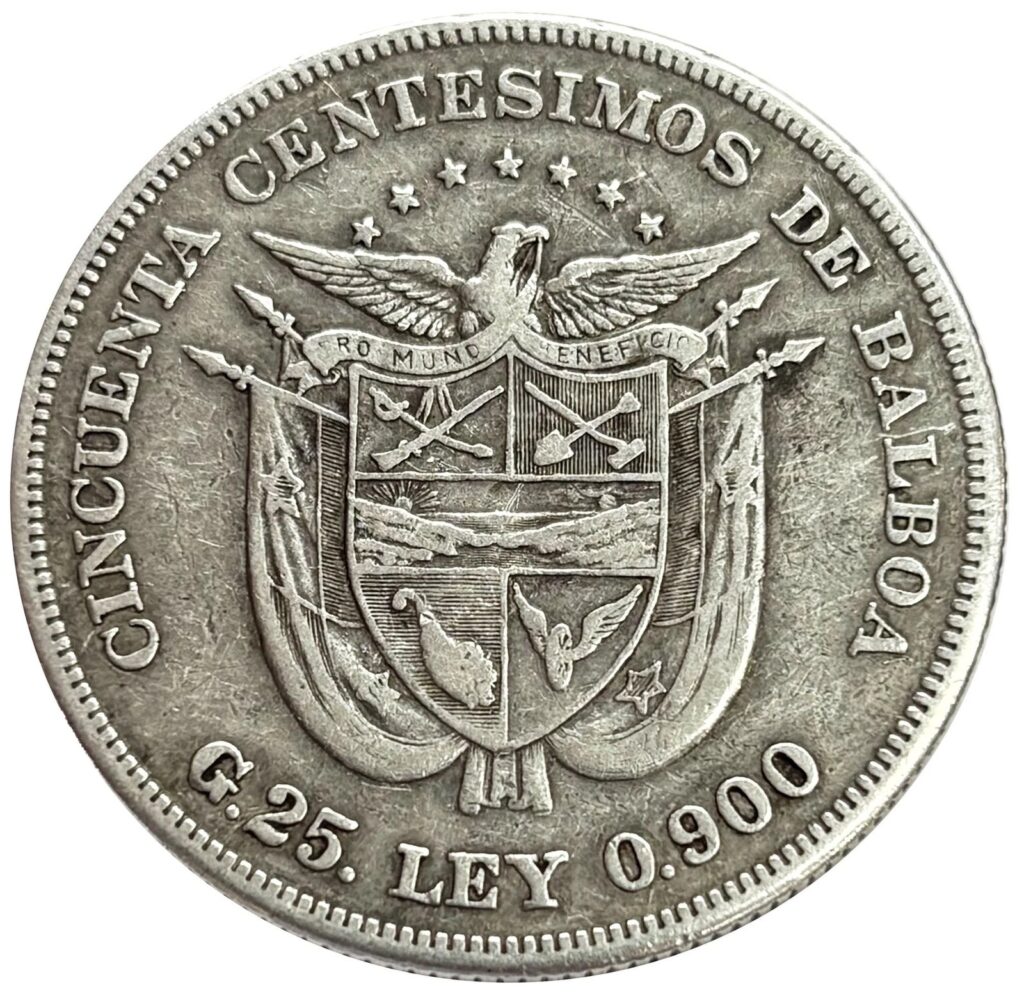
Panama occupies a fascinating position in the history of Latin American coinage. Situated on the narrow isthmus connecting the Atlantic and Pacific worlds, it was for centuries a commercial crossroads where Spanish, Colombian, Caribbean and international currencies circulated. For investors in rare silver coins, Panama therefore offers something considerably more interesting than simply silver content: it offers a combination of precious-metal value, early republican history, maritime trade, the birth of the modern Panamanian state, and the extraordinary story of the Panama Canal.
There is, however, an important distinction to make when discussing “Panama silver coins from the 1800s.” Modern Panama did not become an independent republic until 1903, and the Balboa was introduced in 1904. Consequently, coins actually denominated as Panamanian Balboas do not date from the nineteenth century. Earlier nineteenth-century silver associated with the territory belongs principally to the Spanish-American and Colombian monetary traditions, while the first unmistakably modern Panamanian silver series begins with the extraordinary 1904 coinage. This distinction is important for serious investors because provenance, issuer, mint, date and historical context can materially affect a coin’s numismatic significance.
The monetary history of Panama before independence is exceptionally rich. During the colonial period, Panama was part of the Spanish imperial system, and silver coins circulated extensively throughout the region. The Spanish-American monetary system was based on denominations such as the real, with eight reales forming the famous “piece of eight.” Large silver coins of this tradition became fundamental to international commerce and continued circulating well into the nineteenth century. Historical numismatic research records examples of Panama-related colonial silver, including coins recovered archaeologically from Panama Viejo.
Following the independence movements of the early nineteenth century, Panama became part of the political entities that evolved into Gran Colombia and subsequently Colombia. This means that a nineteenth-century silver coin connected historically with Panama may bear the name or designs of Nueva Granada, Gran Colombia or Colombia, rather than “Panama.” That distinction should never be overlooked when building an investment-quality collection.
The Colombian monetary system inherited much of the Spanish denomination structure. Silver denominations included ¼, ½, 1, 2 and 8 reales. The 8-real denomination was particularly important because it was effectively the large silver peso of the period. The Banco de la República’s numismatic collection confirms that early republican Colombia continued the inherited Spanish monetary system, including silver denominations from ¼ through 8 reales.
For the investor, these coins can be particularly compelling when the objective is to acquire historically connected Latin American silver, rather than simply modern coins bearing the word Panama. An early nineteenth-century silver real or peso connected to the monetary world in which Panama participated can represent an important historical bridge between the Spanish colonial economy, the independence era and the emergence of modern nation-states.
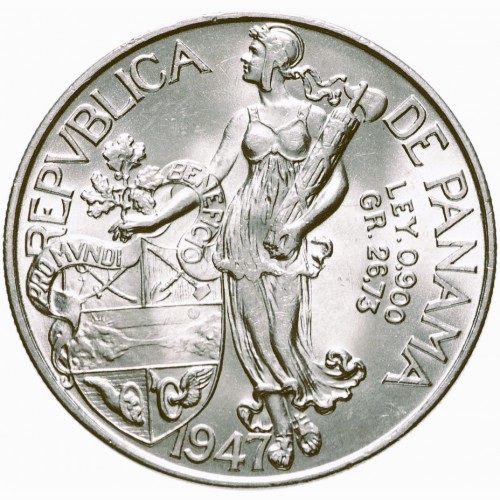
The transformation of Panama into a modern republic fundamentally changed its numismatic history. Panama separated from Colombia in 1903, and the new republic subsequently established the Balboa as its monetary unit. The first Balboa coinage appeared in 1904, creating one of the most distinctive early twentieth-century silver series in the Americas.
The inaugural series is especially fascinating because it was produced to fit Panama’s commercial circumstances. The United States had acquired the Panama Canal project in 1904, and the new republic’s coinage was closely connected with the monetary environment surrounding the Canal Zone. The first Balboa coinage consisted of denominations of 2½, 5, 10, 25 and 50 centésimos, all struck in .900 silver.
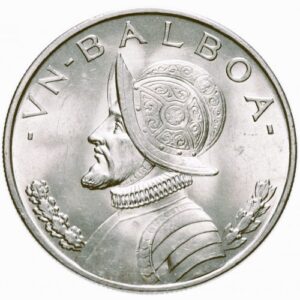
These coins feature Vasco Núñez de Balboa, the Spanish explorer associated with the European discovery of the Pacific from the Americas, on the obverse. The reverse presents Panama’s coat of arms and the denomination. The inscriptions also identify the silver content, making these coins particularly transparent examples of early twentieth-century precious-metal coinage.
This first series is among the most historically attractive areas of Panamanian numismatics because it combines several narratives in a single object: the birth of the Republic of Panama, the monetary relationship with the United States, the development of the Panama Canal and the historical figure whose name became attached to the country’s currency.
Among all Panamanian silver coins, perhaps none has a more unusual physical personality than the 1904 2½ Centésimos, popularly known as the “Panama Pill.”
It is an exceptionally small coin: only 10 mm in diameter and 1.25 grams in weight, struck in .900 silver. Numista records a mintage of approximately 400,000 pieces. NGC notes that its tiny size made it one of the smallest government-authorized circulating coins in the Americas and explains that its denomination fitted the older monetary relationships used in the region.
Its appeal illustrates an important principle in rare-coin investment: rarity is not always about size or intrinsic precious-metal content. A coin can become desirable because it possesses an unusual denomination, extraordinary design, fascinating historical circumstances, low survival rates, or a combination of all four.
The Panama Pill is an excellent example. Its silver content is modest, but its historical identity is unmistakable. Its tiny dimensions make it instantly recognizable, while the 1904 date places it at the beginning of Panama’s modern national coinage. The original silver version was subsequently replaced by copper-nickel versions, adding further historical distinction to the 1904 issue.
For investors, this is precisely why the market for rare coins should not be evaluated solely according to bullion weight.
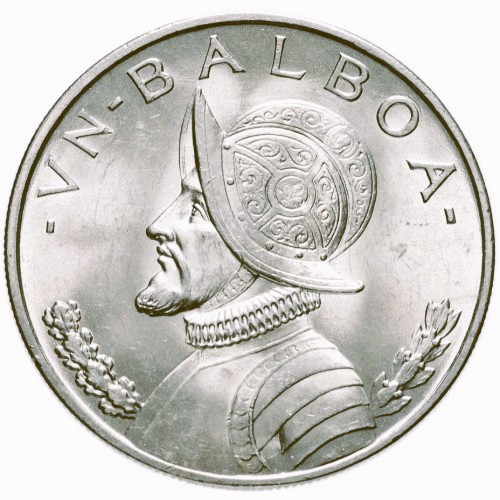
The 1904 5 Centésimos provides a more substantial example of the first Panamanian silver series. It weighs 2.5 grams and contains .900 silver, with Vasco Núñez de Balboa appearing on the obverse and Panama’s coat of arms on the reverse. The inscription explicitly records both the weight and fineness of the silver.
The coin is historically significant because it represents Panama asserting its own monetary identity immediately after independence. Rather than being simply another Latin American silver coin, it belongs to the formative period of the Panamanian republic.
The 1904 issue also demonstrates why condition matters enormously. Two coins of identical denomination and date can have radically different numismatic desirability depending upon preservation, surface quality, strike, toning, marks and overall eye appeal. For serious investors, an attractive example with strong original detail can be considerably more interesting than a heavily worn example purchased primarily for its silver content.
The larger denominations become increasingly interesting because they contain substantially more silver.
The 1904 10 Centésimos weighs 5 grams and is struck in .900 silver. Contemporary cataloguing records a mintage of approximately 1.125 million for the 1904–1905 issue.
The 1904 25 Centésimos weighs 12.5 grams and is also .900 silver. Numismatic cataloguing records approximately 1.61 million examples for the 1904 issue, with very small numbers identified as proofs.
Then comes the impressive 50 Centésimos, weighing 25 grams and struck in .900 silver. The series is particularly fascinating because the 1904 and 1905 issues have different survival histories. Numista records approximately 1.8 million pieces dated 1904 and 1 million dated 1905, while noting that most of the 1905 issue were melted down.
That last point is especially relevant to investors. Original mintage is not the same thing as surviving population. A coin may have had a relatively substantial original production but become considerably scarcer after decades of circulation, melting, loss or damage. Understanding survival is therefore a central part of serious numismatic research.
Rare silver coins occupy an unusual position between tangible precious metals and historical assets. Unlike a generic silver bar, a rare coin has an additional layer of scarcity determined by history, production, survival and demand.
Panamanian silver coins can offer several characteristics that make them interesting within such a strategy.
First is intrinsic silver content. Early Balboa silver issues were generally struck in .900 fineness. The metal provides a tangible underlying component, although the market price of a rare coin can diverge substantially from the melt value of its silver.
Second is historical scarcity. Coins from the formative period of the Republic of Panama are physical artifacts of a major geopolitical transformation. The 1904 series belongs to the earliest years of the modern republic.
Third is the Panama Canal connection. Few places in the world have a historical story as strongly connected to global commerce as Panama. The establishment of the Canal transformed international maritime trade, and coins from the period provide a tangible connection to that extraordinary era.
Fourth is design. The Balboa series combines national heraldry, historical portraiture and precise declarations of silver weight and fineness. The result is a highly recognizable national coinage.
Fifth is scarcity in exceptional condition. For advanced investors, the question is not merely whether a particular date exists, but how many attractive, problem-free examples survive.
The appeal of Panamanian silver does not stop with the inaugural series. Later issues include the classic 1 Balboa, which became one of the country’s best-known silver denominations.
The 1 Balboa issues of 1931–1947 were struck in .900 silver, weighing 26.73 grams, with a diameter of 38.1 mm. The design evolved from the early Balboa concept while maintaining Panama’s distinctive numismatic identity.
Panama subsequently issued commemorative silver coins associated with important national anniversaries and historical subjects. For example, the 1953 1 Balboa commemorated the 50th anniversary of the Republic of Panama and was also struck in .900 silver.
Later twentieth-century Panama produced numerous commemorative silver issues, some of which were struck in .500, .925 and other finenesses. For an investor, this creates the possibility of constructing a chronological collection spanning the birth of the republic, the early Canal era, national anniversaries and later commemorative coinage.
Purchasing rare Panama silver coins should involve substantially more than simply checking the silver price.
Authenticity comes first. Early Latin American coinage is a specialist field, and valuable pieces should be purchased from reputable dealers with established expertise.
Condition is critical. Scratches, cleaning, corrosion, rim damage, tooling and other problems can significantly influence desirability. Original surfaces and attractive toning can be important characteristics in higher-quality material.
Provenance can add confidence. Documentation showing where a coin came from, previous auction appearances or certification by a respected grading service can be valuable.
Mintage and survival must be distinguished. A large original mintage does not necessarily mean a large surviving population, while a low mintage does not automatically guarantee high market value.
Market liquidity matters. Rare coins are not equivalent to exchange-traded commodities. A buyer should understand that selling an unusual numismatic asset may take time and that dealer spreads, auction commissions and market conditions can affect realized prices.
Most importantly, rare coins should be approached as long-term tangible assets with numismatic characteristics, rather than as guaranteed financial investments. Historical rarity can create significant demand, but no individual coin’s future price can be guaranteed.
The difference between buying an ordinary old silver coin and acquiring an important numismatic asset often comes down to expertise.
A specialist dealer should be able to explain the coin’s date, denomination, metal composition, historical context, catalogue references, condition and—where applicable—certification. The dealer should also distinguish between bullion value and numismatic value rather than presenting every old silver coin as automatically rare.
This is where House of Emirates® in London can be particularly attractive to investors seeking exceptional historic precious-metal assets. House of Emirates® operates within the luxury and rare-treasure market, offering rare gold and silver coins alongside other historically significant treasures. Its London positioning and focus on investment-grade precious metals provide a natural environment for clients interested in acquiring rare numismatic pieces.
For an investor considering Panamanian silver, the objective should not simply be to purchase “an old Panama coin.” The more sophisticated approach is to identify pieces with a compelling combination of age, authenticity, silver content, historical significance, scarcity, condition and market recognition.
Panamanian silver coinage tells a remarkable story. Its roots reach back into the Spanish-American monetary world, through the nineteenth-century Colombian period, and ultimately into the creation of the independent Republic of Panama. The 1904 Balboa series then transformed that history into a distinctly Panamanian national currency.
From the tiny 1904 Panama Pill to the substantial 50 Centésimos and later 1 Balboa pieces, these coins demonstrate why rare silver can possess a significance far beyond its weight in metal. They are surviving physical witnesses to political transformation, international commerce, the emergence of the Panama Canal and the formation of a modern nation.
For investors who appreciate tangible wealth, historical scarcity and precious-metal assets, carefully selected Panama silver coins can therefore occupy a distinctive place within a diversified rare-coin portfolio. The strongest candidates are not necessarily the most expensive ones, but those where authenticity, condition, historical importance, scarcity and market demand come together convincingly.
For clients seeking such historic treasures, House of Emirates® in London offers a compelling destination for exploring rare silver and gold coinage. The company combines the world of luxury with tangible historical assets, providing investors with access to carefully selected precious-metal treasures.
House of Emirates® — London — Where Eternity Becomes Luxury Asset.
Historical and technical details above are based on numismatic references and institutional sources; market values fluctuate and should not be interpreted as guarantees of investment performance.