Central banks around the world are accumulating gold at a pace that has transformed the precious metal from a traditional reserve asset into one of the most closely watched components of global financial strategy. But why are central banks buying so much gold — and what does this mean for investors, collectors and the long-term value of physical gold?
The answer goes far beyond the price of gold.
Central banks are increasingly using gold to diversify their reserves, manage geopolitical risk, protect purchasing power, strengthen financial resilience and reduce dependence on individual currencies or counterparties. The trend has become particularly significant among emerging-market central banks, while gold’s traditional role as a store of value continues to attract reserve managers worldwide.
According to the World Gold Council’s 2026 Central Bank Gold Reserves Survey, 89% of central-bank respondents expect global central-bank gold reserves to increase over the next 12 months, while a record 45% expect their own gold reserves to increase.
For anyone interested in gold investment, rare gold coins, historic gold coins, bullion and numismatic assets, this institutional demand deserves close attention.
Central-bank gold purchases have remained remarkably strong in recent years.
The World Gold Council reports that central banks purchased 863.3 tonnes of gold in 2025, following three consecutive years in which annual buying exceeded 1,000 tonnes. Although 2025 was below those exceptional levels, it remained substantially above the 2010–2021 annual average of 473 tonnes.
The trend has continued into 2026. In the second quarter of 2026, central-bank net gold demand reached 289 tonnes, five times the revised first-quarter figure and the strongest second quarter on record, according to the World Gold Council.
This is important because central banks are not short-term speculative investors. Their reserve-management decisions are generally designed around long-term objectives such as safety, liquidity, diversification and preservation of value.
In other words, central-bank gold buying represents a structural demand for gold rather than simply a reaction to short-term market movements.
One of the most important reasons central banks buy gold is diversification.
Foreign-exchange reserves are traditionally dominated by currencies and government securities. Concentrating reserves in a limited number of currencies creates exposure to movements in exchange rates, interest rates, monetary policy and financial markets.
Gold provides a different type of reserve exposure.
Because physical gold is not issued by another government or dependent on the creditworthiness of a particular corporation, it can provide central banks with an asset that behaves differently from conventional financial instruments.
The World Gold Council’s 2026 survey found that 83% of respondents regarded gold as relevant because of its portfolio-diversification properties, while 84% cited its role as a long-term store of value.
For reserve managers, this makes gold particularly attractive when the global financial environment becomes uncertain.
Unlike a government bond or bank deposit, physical gold is not someone else’s liability.
A central bank holding physical gold does not depend on an issuer continuing to meet interest or principal payments. Gold therefore occupies a distinctive position within international reserves.
This does not mean gold is risk-free. Its market price can be volatile, and its valuation can fluctuate significantly. The IMF’s 2026 analysis specifically notes that gold carries market risk and that its hedging and safe-haven characteristics can vary depending on the economic environment.
Nevertheless, the absence of conventional credit risk is an important characteristic for reserve managers.

Geopolitical uncertainty is another major factor behind today’s central-bank gold accumulation.
Wars, sanctions, trade disputes, financial restrictions and changes in international relations can affect the accessibility and value of financial reserves.
Gold can provide a degree of diversification from assets that are directly connected to particular governments or financial systems.
The World Gold Council’s 2026 survey found that 90% of respondents considered gold’s performance during periods of crisis relevant to their decision to hold the metal. Among emerging-market and developing-economy central banks, 85% regarded gold’s role as a geopolitical-risk hedge as relevant.
This helps explain why gold has become more than simply a traditional reserve asset. For some central banks, it is increasingly viewed as a strategic component of financial resilience.
Another reason central banks hold gold is its long-established reputation as a store of value.
Central banks have to manage reserves through changing economic cycles. Inflation, currency depreciation and shifts in interest rates can affect the real value of financial assets.
Gold cannot guarantee protection against inflation in every period, and its price can fall. However, its long-term monetary history and limited physical supply make it fundamentally different from fiat currencies, whose supply can be expanded through monetary policy.
The World Gold Council’s latest survey confirms that gold’s role as a long-term store of value remains one of the key reasons central banks continue to hold and accumulate it.
Perhaps the most significant development is the changing composition of international reserves.
The 2026 World Gold Council survey found that 74% of respondents expect the share of US dollar holdings in global reserves to be moderately or significantly lower over the next five years, while respondents expect gold holdings to increase.
This does not mean that the US dollar is disappearing from global reserves. It remains an exceptionally important international currency.
Rather, the data points towards a broader strategy of reserve diversification, in which gold plays a larger role alongside currencies and other reserve assets.
This is particularly relevant for emerging economies seeking to build more diversified reserve portfolios.
China provides one of the clearest examples of the current central-bank gold-buying trend.
According to data reported on September 7, 2026, the People’s Bank of China extended its gold-buying streak to 22 consecutive months.
China’s official gold reserves reached 76.73 million ounces at the end of August 2026, following an increase of 650,000 ounces during the month. This was China’s largest monthly increase since October 2023.
The significance is not simply the size of the latest purchase.
The more important point is the consistency of accumulation.
China’s continued purchases demonstrate that gold remains an important component of its long-term reserve strategy even as gold prices have reached elevated levels.
China is not alone. Poland was the largest central-bank buyer for the second consecutive year in 2025, adding 102 tonnes, according to the World Gold Council.
The broader pattern shows that central-bank gold demand is geographically diversified rather than being driven by one institution alone.
For private investors and collectors, central-bank gold accumulation is worth watching because institutional demand contributes to the underlying global demand for physical gold.
However, investors should distinguish between bullion gold and numismatic gold.
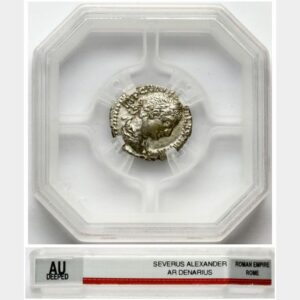
Central banks generally purchase large quantities of standardized monetary gold, often in the form of high-purity bullion bars. Private collectors can access a much broader world of physical gold through rare gold coins, ancient gold coins, historic gold coins and numismatic pieces.
A rare gold coin can have several layers of value:
This means a historic gold coin is not simply a piece of gold. It can also be a tangible historical asset.
The growing institutional interest in gold reinforces an important distinction between owning gold as a commodity and owning exceptional physical gold with historical and numismatic significance.
A modern bullion bar is primarily valued according to its gold content and market price.
A rare ancient or historic gold coin may have an entirely different valuation structure.
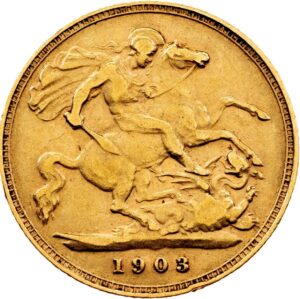
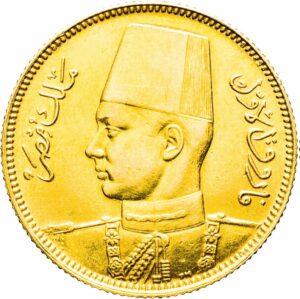
For example, an exceptional ancient gold coin, Islamic gold dinar, European gold coin or historic sovereign can combine intrinsic precious-metal value with scarcity, history and collector demand.
This is one reason rare coins occupy a distinctive position within the broader world of luxury assets and tangible investments.
For sophisticated collectors, the attraction is not simply owning gold. It is owning a scarce piece of history that has survived for centuries.
Central-bank buying should not be interpreted as a guarantee that gold prices will rise indefinitely.
Gold remains a market asset, and its price can experience substantial corrections. Interest rates, currency movements, investor sentiment, central-bank policy and global economic conditions can all influence the gold market.
Instead, central-bank accumulation should be viewed as an important long-term structural signal.
The message from reserve managers is clear: gold continues to have strategic relevance in the global financial system.
The World Gold Council’s 2026 survey concluded that central banks increasingly regard gold as an active and important strategic asset, with economic and geopolitical uncertainty reinforcing the importance of diversification and risk management.
For thousands of years, gold has served as money, wealth and a symbol of financial power.
Modern central banks may manage sophisticated digital financial systems and enormous foreign-exchange reserves, but they continue to allocate part of those reserves to one of humanity’s oldest monetary assets.
That is significant.
Central-bank gold buying reflects a broader recognition that physical gold remains relevant in an increasingly complex financial world.
For private investors, collectors and wealth-conscious buyers, the lesson is not necessarily to follow central banks blindly. Rather, it is to understand why these institutions continue to value gold: diversification, liquidity, long-term value preservation, geopolitical resilience and the absence of conventional issuer risk.
At the same time, rare and historic gold coins offer something that conventional bullion cannot: numismatic scarcity, cultural heritage and historical significance.
The evidence suggests that central-bank demand for gold is likely to remain an important feature of the global precious-metals market.
With 89% of respondents in the World Gold Council’s 2026 survey expecting global central-bank gold reserves to increase over the next 12 months, the strategic role of gold appears firmly established.
Whether gold prices rise, consolidate or experience periods of volatility, the fundamental message from central banks is difficult to ignore.
Gold is not merely a relic of the past. It remains a strategic global reserve asset.
For collectors and investors seeking tangible wealth, the same principle continues to make rare gold coins, historic gold coins and exceptional numismatic assets worthy of serious consideration.
House of Emirates® specializes in exceptional rare coins and precious-metal numismatic treasures for discerning collectors seeking historical significance, rarity and tangible luxury investment assets.