An authoritative historical and numismatic study By: House of Emirates® Coins
The emergence of Ottoman coinage represents one of the most important material milestones in the transformation of a small frontier principality in northwestern Anatolia into an expanding state that would eventually govern territories across Europe, Asia and Africa. Among the most compelling surviving witnesses to this transformation are the very early silver akçes attributed to Orhan Gazi, the second ruler of the Ottoman dynasty. Small in size, modest in their physical appearance and frequently inscribed in Arabic script, these coins preserve evidence of a political authority beginning to express itself through its own monetary issues.
The first securely established Ottoman silver coins are generally attributed to Orhan Gazi, whose reign is conventionally dated from approximately 1324 to 1362 AD. The emergence of his coinage during the second quarter of the fourteenth century marked a decisive stage in the development of Ottoman political and economic identity. Orhan’s silver akçes provide the strongest foundation for understanding the beginning of a recognisably Ottoman monetary tradition.
For House of Emirates® — London — Where Eternity Becomes a Luxury Asset, the rare silver akçe of Orhan Gazi represents far more than an ancient monetary object. It belongs to a formative period in the history of one of the world’s most influential dynasties, offering a tangible connection to the moment when Ottoman authority began to leave its name upon silver. To understand the significance of these remarkable coins, one must examine the political landscape, monetary influences, inscriptions and evolving identity that shaped the earliest Ottoman issues.
The Ottoman state did not emerge in an economic or political vacuum. During the thirteenth century, Anatolia was a complex landscape of Turkish principalities, Byzantine territories, established trading centres and the remnants of the Seljuk Sultanate of Rum. Mongol expansion into the Middle East and the resulting influence of the Ilkhanid state further complicated the region’s political structure.
As Seljuk authority weakened, numerous local dynasties and frontier principalities developed their own centres of power. Among them were the Ottomans, whose earliest territories lay in northwestern Anatolia, close to Byzantine lands. Their geographical position offered opportunities for territorial expansion, military alliances, commercial interaction and the gradual development of administrative institutions.
Money was already central to this environment. Byzantine coins, Seljuk issues, Ilkhanid silver and the currencies of neighbouring Turkish principalities circulated within different commercial settings. These established monetary traditions provided models for weight, silver content, inscriptions and the presentation of political authority.
The early Ottoman rulers inherited this sophisticated but politically fragmented monetary world. Their first coins did not need to invent an entirely new visual language. Instead, they could adapt familiar conventions while placing the name and authority of the Ottoman ruler at the centre of the design.
This distinction is essential. The emergence of Ottoman coinage was not simply the moment when a local ruler first produced a piece of silver. It was the beginning of a monetary tradition through which the dynasty could identify its authority, support economic exchange and gradually establish a recognisable political identity.
Coins are particularly valuable historical evidence because they survive independently of later chronicles. Their inscriptions, weight, fabric and manufacturing characteristics can help historians reconstruct the political and economic world in which they were produced. Even when the exact circumstances of an issue remain uncertain, a coin can preserve the name of a ruler and the conventions through which his authority was communicated.
Orhan Gazi ruled during the formative decades of Ottoman expansion. Under his leadership, the Ottomans strengthened their position in northwestern Anatolia and developed institutions that supported a more organised state. His reign witnessed the transition from a frontier principality into an increasingly established political power.
The conquest of Bursa in 1326 was a defining event. The city became an important political and economic centre, providing the Ottomans with access to established commercial networks and an urban environment in which administration and monetary production could develop.
The earliest Ottoman silver coinage is closely associated with this period of consolidation. The appearance of coins bearing Orhan’s name provides tangible evidence that the Ottoman dynasty had begun expressing its authority through a monetary medium of its own.
The year 727 AH, corresponding to 1326–1327 AD, is traditionally associated with an early dated Ottoman silver issue. This date is historically significant because it falls within the period of Ottoman consolidation around Bursa. However, not every surviving akçe carries a date, and undated specimens cannot automatically be assigned to a particular year.
The importance of Orhan’s coinage lies in the combination of dynastic identification, established Islamic inscriptional conventions and the gradual development of recognisable Ottoman designs. The earliest issues did not necessarily share one standardised appearance. Instead, they reveal an evolving monetary tradition that adapted older regional models while establishing the authority of a new dynasty.
The first Ottoman silver akçes should therefore be understood not as a single, perfectly uniform design introduced in one decisive moment, but as the beginning of a process through which Ottoman monetary identity became increasingly distinctive.
The most widely accepted starting point for Ottoman coinage is the reign of Orhan Gazi in the second quarter of the fourteenth century. The surviving silver akçes attributed to him provide the clearest evidence of early Ottoman ruler-name coinage.
An important distinction must be made between the emergence of the Ottoman state and the appearance of its first securely established coins. The dynasty existed before the introduction of its documented monetary issues. A ruler could exercise political and military authority without immediately producing a coinage bearing his name.
The introduction of silver akçes suggests that the Ottoman administration had reached a stage at which the ruler’s identity could be expressed through a recognised monetary instrument. Such a development was important for commerce, the circulation of silver and the public representation of political authority.
Early Ottoman coins display different inscriptional arrangements. Some combine the ruler’s name with religious formulas and references to established Islamic authority. Other types place greater emphasis on the name and title of the Ottoman ruler. These differences reflect the evolution of a monetary tradition that drew upon older Islamic and regional practices.
One notable inscriptional tradition associates the ruler’s name with that of the Abbasid caliph al-Mustansir bi’llah, who lived centuries before Orhan Gazi. Such references reflect the influence of established Islamic monetary conventions and the ways in which early rulers employed familiar symbols of legitimacy.
Other early issues bear inscriptions invoking divine protection for the ruler’s kingdom. These formulas placed the Ottoman dynasty within a broader Islamic political culture while preserving its individual identity.
The precise chronology of every early variety remains difficult to establish. Not all surviving coins are dated, and their attribution depends on inscriptions, stylistic features, weight and comparison with related issues. Nevertheless, the silver akçes of Orhan Gazi mark the accepted beginning of Ottoman coinage as a securely established numismatic tradition.
The earliest Ottoman akçes were small, hammered silver coins. Unlike modern machine-struck currency, they were produced by placing a prepared silver blank between engraved dies and striking it with a hammer. The resulting pieces could be irregular in shape, and the designs did not always occupy the centre of the flan perfectly.
Their modest appearance should not obscure their historical importance. In medieval monetary systems, a coin’s authority depended on its recognised issuer, accepted weight, metal content and inscriptions rather than on elaborate decoration.
Several characteristics distinguish the early issues attributed to Orhan Gazi.
One of the most important features is the appearance of Orhan’s name, sometimes in the form Orhan bin Osman, meaning Orhan, son of Osman.
This inscription establishes the dynastic identity of the issuer and connects the second Ottoman ruler directly to the founder of the dynasty. It transforms the coin into a physical declaration of political authority.
For a developing state, the appearance of a ruler’s name on money was significant. It demonstrated that the authority of the dynasty was being expressed not merely through military campaigns and territorial control, but through a recognised economic instrument.
Early Ottoman akçes employed religious inscriptions familiar from other Islamic coinages. Such formulas placed the new dynasty within an established religious and monetary culture.
Their use illustrates how emerging political powers could draw upon recognised conventions while developing their own identities. The Ottoman rulers were not isolated from the wider Islamic world; they participated in a regional environment in which monetary designs and inscriptions carried established meanings.
Some early Ottoman silver issues display similarities to Ilkhanid coins, particularly those associated with Abu Sa’id Bahadur Khan. These similarities demonstrate the influence of neighbouring monetary systems on Ottoman coin production.
Such relationships should not be interpreted as evidence that the early Ottoman coins lacked a distinctive identity. Rather, they reveal the process through which the Ottomans adapted familiar monetary conventions to their own political circumstances.
The early Ottoman monetary tradition emerged through a combination of continuity and innovation. Existing regional designs provided a foundation, while the appearance of the Ottoman ruler’s name established the identity of the issuing authority.
Other akçes feature comparatively restrained compositions centred on the ruler’s name and religious formulas. Some include the phrase khallada Allah mulkahu, meaning approximately, “May God perpetuate his kingdom.”
These inscriptions illustrate the gradual emergence of a more recognisable Ottoman monetary style. Rather than relying exclusively on inherited regional conventions, the coins increasingly expressed the identity of the ruling dynasty itself.
The surviving specimens vary in weight, diameter and condition. Such differences are normal in early hammered coinage and must be considered when assessing individual examples. No single measurement should be assumed to apply to every coin attributed to Orhan Gazi.
The early akçe was therefore distinctive not because it immediately abandoned every older convention, but because it placed Ottoman dynastic authority within those conventions. Its historical importance lies in this combination of continuity and emerging independence.
The question of whether Osman Gazi issued coins before Orhan remains one of the most intriguing debates in early Ottoman numismatics.
Osman Gazi founded the dynasty that would eventually establish the Ottoman Empire. Later historical traditions associate the growth of Ottoman political authority with the right to strike coins and have the ruler’s name proclaimed in the Friday sermon. These accounts are important for understanding how later generations interpreted the origins of the dynasty, but they do not independently prove that Osman produced any particular surviving coin.
A small number of specimens have been attributed to Osman ibn Ertuğrul. Their interpretation remains disputed because of questions concerning their inscriptions, weight, style and possible connections with neighbouring principalities.
Consequently, it would be too categorical to declare that Osman definitely issued the first Ottoman coins. The surviving evidence for his coinage is not as secure as the evidence for the silver issues attributed to Orhan Gazi.
This distinction is historically important. The first ruler of a dynasty is not necessarily the first ruler whose coins can be authenticated with confidence. In Osman Gazi’s case, the question remains open to scholarly debate; in Orhan Gazi’s case, the surviving silver akçes provide a firmer foundation for the history of Ottoman monetary production.
For historians and investors in rare historical objects, this debate illustrates a fundamental principle: the importance of an artefact depends not only on its age, but also on the strength of the evidence connecting it to a particular ruler, place and period.
The early Ottoman akçe was more than a small silver denomination. It formed part of the wider process through which the Ottoman state developed its economic and administrative foundations.
As Ottoman territory expanded, the rulers required mechanisms to support trade, collect revenue, remunerate officials and soldiers, and facilitate transactions across increasingly connected urban and rural markets. A recognised silver coin could serve these purposes while communicating the authority of the issuing ruler.
The akçe eventually became the principal silver denomination of the Ottoman monetary system and remained central to Ottoman currency for centuries. Its longevity demonstrates the importance of the monetary tradition established during the dynasty’s early development.
Nevertheless, the first akçes did not immediately replace every competing currency. Medieval Anatolia contained multiple political authorities, and monetary circulation reflected local circumstances, commercial relationships and the availability of different coins. Early Ottoman issues circulated within this diverse environment rather than within a fully unified imperial economy.
The gradual expansion of Ottoman power brought additional territory, commercial centres and populations into the dynasty’s sphere of influence. In this setting, coinage became an increasingly important expression of political continuity.
A particularly revealing feature of the earliest akçes is that they were struck before the Ottomans had developed the extensive monetary infrastructure of their later empire. These coins therefore document an emerging state rather than the mature administrative machinery associated with the great Ottoman sultans of subsequent centuries.
Their historical value lies precisely in that formative character. Each surviving example preserves material evidence of a dynasty beginning to establish the institutions and symbols through which its authority would endure.
The development of Ottoman coinage did not end with Orhan Gazi. His successors continued to issue silver akçes, and the denomination became an enduring element of Ottoman economic life.
During the fourteenth and fifteenth centuries, Ottoman territorial expansion encouraged the development of additional minting centres and wider monetary circulation. The akçe became an established silver denomination associated with Ottoman governmental authority.
A major transformation occurred under Mehmed II, known as Mehmed the Conqueror. In 1478, the Ottomans introduced the sultani, their first distinctive regular gold coin, marking a significant expansion of the monetary system beyond its traditional reliance on small silver denominations.
The contrast between the earliest akçes and the later gold sultani is striking. The former belonged to a small frontier state consolidating its identity; the latter belonged to a powerful empire whose political and commercial reach had grown dramatically.
Yet the introduction of gold coinage did not diminish the importance of the early silver issues. The akçe had already established a monetary tradition that preceded the empire’s great territorial expansion and helped define the dynasty’s relationship with commerce, administration and political authority.
This is why early Ottoman coins deserve to be studied as historical documents in their own right. They preserve evidence of the dynasty at a moment when its future scale and longevity could not have been anticipated.
From a small silver coin bearing a ruler’s name to the sophisticated monetary system of an empire, Ottoman coinage records a remarkable transformation in political power and economic organisation.
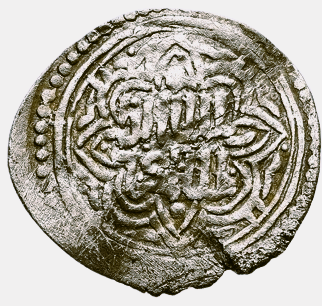
The rare silver akçe of Orhan Gazi offered by House of Emirates® provides a tangible connection to the formative period of Ottoman history. Its attribution to Orhan I places it within the early development of Ottoman silver coinage, when the dynasty was beginning to express its identity through its own monetary issues.
The offered coin is described as an undated issue attributed to Orhan I and the Bursa Mint, within the period AH 724–761 (1324–1360 AD). Because the coin is undated, its exact year of striking cannot be established from the coin itself. Its attribution must instead be understood through its inscriptions, style and relationship to other known early Ottoman issues.
Its significance extends beyond its silver content. The coin belongs to a monetary tradition that would survive for centuries and accompany the expansion of one of history’s most influential empires. Its small physical dimensions stand in remarkable contrast to the historical developments associated with its issue.
For House of Emirates®, the appeal of this early silver akçe lies in the intersection of historical importance, dynastic heritage and the survival of a tangible artefact from a formative age. Unlike a later imperial coin issued when Ottoman institutions were firmly established, an early Orhan Gazi akçe belongs to a period when the dynasty’s political identity was still taking shape.
For investors in rare historical assets, this distinction is meaningful. An early Ottoman coin offers a material connection to the period in which Ottoman monetary identity emerged. Its importance is rooted in its historical context, its attribution, the survival of the individual specimen and its place within the wider numismatic record.
Rarity should always be assessed at the level of the specific type and specimen, with attention to authenticity, provenance, condition and the number of comparable examples known. Nevertheless, the earliest Ottoman issues occupy a particularly important position in the study of Islamic and Turkish coinage because they document the emergence of a new ruling dynasty through surviving material evidence.
The rare silver akçe of Orhan Gazi thus stands at the intersection of monetary history and the rise of Ottoman political power. It offers an opportunity to engage with the earliest securely established phase of Ottoman coinage and the historical developments that would eventually transform a frontier principality into an empire.
The birth of Ottoman coinage was a gradual historical process, but its importance is unmistakable. Under Orhan Gazi, the Ottomans produced silver coins that placed the ruler’s name within established Islamic monetary conventions. Their inscriptions, designs and physical characteristics reveal a dynasty adapting existing traditions while establishing a recognisable monetary identity.
The precise question of whether Osman Gazi issued coins remains unresolved, and the earliest akçes cannot all be assigned to a single date or uniform design. Yet the surviving silver issues of Orhan provide compelling evidence that Ottoman monetary history was already taking shape in the second quarter of the fourteenth century.
Over the centuries that followed, the akçe became the foundation of a much larger monetary system. What began as a modest silver denomination associated with a developing Anatolian principality ultimately belonged to the long history of an empire spanning three continents.
The rare silver akçe of Orhan Gazi offered by House of Emirates® therefore represents more than an ancient monetary object. It evokes the moment when a dynasty began to leave its own name upon silver, creating a material record of political authority that would endure long after the circumstances of its creation had passed into history.