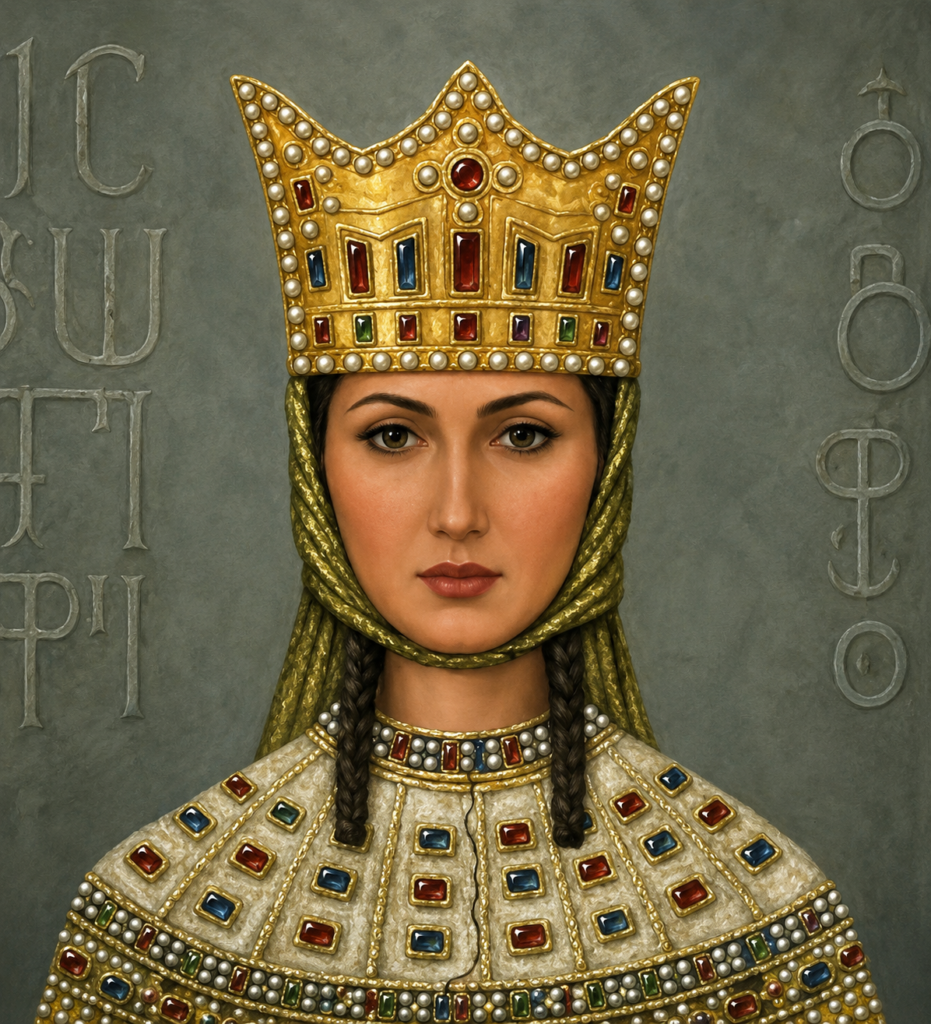
Queen Tamar reigned over the Kingdom of Georgia from 1184 to 1213 AD, presiding over what historians widely regard as the Golden Age of medieval Georgia. Revered as one of the greatest monarchs in Georgian history, she transformed her kingdom into the dominant political and military power of the Caucasus. Under her leadership, Georgia expanded its borders, flourished economically, and became a renowned centre of Christian culture, architecture, and learning. Although celebrated as a deeply devout Christian ruler, one of the most fascinating aspects of her reign is the appearance of Arabic inscriptions on many of her copper coins, a feature that has intrigued historians and numismatists for generations.
Born into the Bagrationi dynasty, Tamar was crowned as co-ruler with her father, King George III, before becoming the sole sovereign in 1184. Rather than assuming the title of “Queen Consort,” Tamar ruled as King of the Georgians, emphasising her full sovereign authority. During her reign, Georgia defeated numerous regional rivals, including the Seljuq Turks, and established influence over Armenia, Shirvan, and the Empire of Trebizond. The decisive Battle of Basian in 1203 against the Sultanate of Rum cemented Georgia’s military supremacy and marked one of the greatest victories in medieval Caucasian history.
Despite these military successes, Queen Tamar maintained a pragmatic and sophisticated diplomatic relationship with the surrounding Muslim powers, particularly the various Seljuq Sultanates. By Tamar’s reign, the once-mighty Great Seljuq Empire had fragmented into several successor states, including the Sultanate of Rum in Anatolia and various rulers in Persia and Azerbaijan. These neighbouring Muslim states were both rivals and trading partners. Warfare alternated with periods of diplomacy, tribute, prisoner exchanges, and commercial cooperation.
One of Tamar’s most notable confrontations occurred when Sultan Rukn al-Din Suleiman II of Rum attempted to challenge Georgian dominance. According to medieval Georgian chronicles, the Sultan demanded that Tamar convert to Islam and submit to his authority. Rather than accepting these demands, Tamar prepared her armies and entrusted military command to her generals. The resulting Georgian victory at Basian decisively ended Seljuq ambitions in the region and further elevated Georgia’s prestige throughout the Near East.
Yet Tamar did not pursue a policy of religious persecution. Contemporary Islamic chroniclers describe her as a ruler who generally respected Muslim merchants and communities living within her expanding kingdom. Georgian cities such as Tbilisi remained cosmopolitan trading centres where Christians, Muslims, Jews, and Armenians conducted business together. This atmosphere of commercial tolerance became one of the foundations of Georgia’s prosperity.
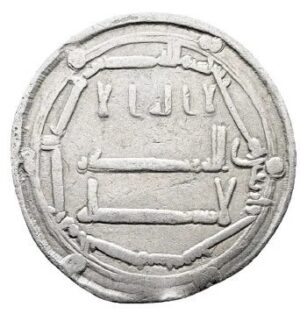
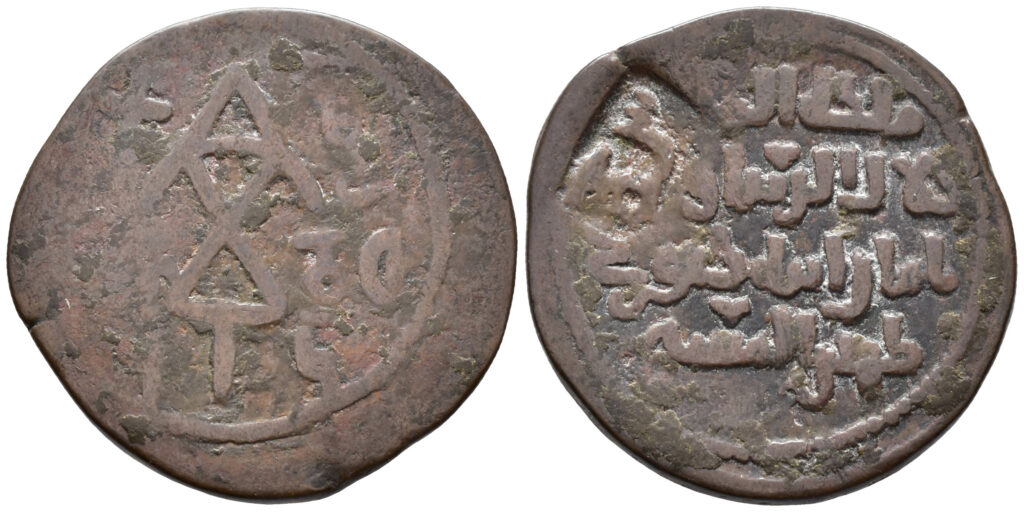
The Arabic inscriptions on Queen Tamar’s coinage should therefore be understood within this broader political and economic context rather than as evidence of Islamic influence over her government. During the twelfth and thirteenth centuries, Arabic functioned as the international commercial language across much of the Middle East, much as English serves global commerce today. Merchants from Persia, Anatolia, Syria, Mesopotamia, and Central Asia were accustomed to reading Arabic inscriptions on coins. By striking coins with Arabic legends, Tamar ensured that her currency would be immediately recognised and readily accepted throughout regional trade networks.
Another important factor was the long-established monetary tradition inherited from previous Islamic dynasties. For centuries, the Abbasid Caliphate, Seljuqs, and other Muslim rulers had produced coins carrying Arabic inscriptions, and these circulated widely across the Caucasus. Rather than creating an unfamiliar monetary system, Georgian authorities wisely adopted a format already trusted by merchants. In many cases, Queen Tamar’s copper coins include Arabic phrases such as “In the name of God” alongside references to Tamar herself as “Queen of Queens” or “Champion of the Messiah.” This remarkable combination demonstrates that the inscriptions were adapted for practical commerce while still proclaiming her Christian sovereignty.
Scholars generally reject the notion that these Arabic inscriptions reflected political submission to the Muslim world. On the contrary, they are widely interpreted as a confident expression of Georgia’s strength. Tamar ruled from a position of military superiority, and her kingdom had little need to imitate foreign powers out of necessity. Instead, the use of Arabic represented a calculated economic policy designed to facilitate international trade while projecting Georgian authority beyond its borders.
Queen Tamar’s coinage also illustrates the remarkable multicultural environment of the medieval Caucasus. Her kingdom stood at the crossroads of Europe and Asia, where Byzantine, Armenian, Persian, Turkic, and Arab civilisations intersected. Coins bearing Arabic inscriptions circulated comfortably within a Christian kingdom because commerce frequently transcended religious boundaries. Merchants valued recognisable weights, trusted metal standards, and familiar inscriptions more than the faith of the issuing ruler.
Today, Queen Tamar’s coins remain among the most sought-after medieval Caucasian numismatic treasures. Their distinctive blend of Georgian royal authority and Arabic epigraphy reflects a sophisticated state that understood both diplomacy and economics. They serve as enduring symbols of one of history’s greatest female monarchs—a ruler whose military victories humbled powerful Seljuq sultans, whose diplomacy encouraged regional prosperity, and whose innovative coinage reveals an empire confident enough to communicate with the wider world in the language of international commerce.
More than eight centuries after her death, Queen Tamar continues to embody the ideals of wise leadership, religious confidence, and political pragmatism. Her coins stand as tangible reminders that great rulers often achieved lasting success not only through conquest, but also through an understanding of trade, culture, and the importance of speaking the language of the world beyond their borders.