Description
Umayyad Silver Dirham of Al-Walid I, Wasit 93 AH (711–712 AD) | Ancient Islamic Investment Coin
House of Emirates® in London and via our online store ( hoemirates.com ) is thrilled to offer its elite clientele this exceptional Umayyad Silver Dirham of Caliph Al-Walid I, struck at the celebrated Wasit Mint in 93 AH, corresponding to 711–712 AD.
Dating to the early eighth century, this remarkable Islamic silver coin belongs to the reign of Al-Walid I ibn Abd al-Malik, who ruled the Umayyad Caliphate from 86–96 AH (705–715 AD). Measuring approximately 26 mm in diameter and weighing 2.50 g of silver, this Very Fine example preserves the distinctive character of the great post-reform Islamic coinage introduced under the Umayyads.
Rather than displaying a portrait of the ruler, the coin carries elegant Arabic inscriptions expressing the central declarations of Islamic faith, making it a powerful physical representation of the religious, political and monetary transformation of the Islamic world. The Wasit Mint, located in Iraq, became one of the most important centres of Umayyad silver dirham production, and its dirhams circulated across an enormous territory connecting the Middle East with regions far beyond.
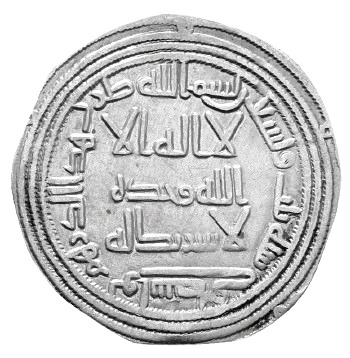
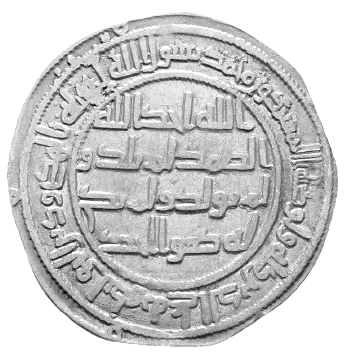
The obverse presents the classic three-line inscription proclaiming the oneness of God: “There is no deity except God alone; He has no equal,” surrounded by a circular inscription identifying the coin as a dirham struck at Wasit in the year 93 AH.
The reverse carries the famous declaration from Qur’an 112 concerning the absolute oneness and eternity of God, accompanied by the surrounding inscription referring to Muhammad as the Messenger of God. This purely epigraphic design is one of the defining characteristics of the reformed Umayyad coinage that replaced the earlier Byzantine and Sasanian-inspired imagery with Arabic inscriptions and Islamic religious formulae.
For the investor in ancient tangible assets, this transformation gives the coin exceptional historical significance: it is not merely an ancient silver denomination, but a surviving document from one of the formative periods of Islamic monetary history. Its Very Fine condition allows the inscriptions and concentric design structure to remain clearly appreciable, while the compact 26 mm format and 2.50 g silver weight make it an elegant and highly tangible representation of early Islamic monetary heritage.
Struck more than thirteen centuries ago, this Umayyad dirham connects the modern investor directly with the world of the early Islamic Caliphate, when the Umayyad state was expanding across vast territories spanning the Middle East, North Africa and beyond. The reign of Al-Walid I was associated with a period of considerable territorial expansion and architectural achievement, while Wasit developed into a major administrative and commercial centre in Iraq.
Today, an original silver dirham from this period represents a remarkable convergence of ancient history, Islamic heritage, monetary evolution, precious metal and craftsmanship. Its 93 AH date places it firmly within the early decades of Islamic coinage following the major Umayyad monetary reforms, while its Wasit attribution adds an important geographic dimension to its historical identity. For discerning investors seeking tangible heritage assets, this Very Fine 93 AH Umayyad Silver Dirham offers an extraordinary opportunity to own an authentic piece of early Islamic history — a small but powerful silver witness to a civilisation that transformed the course of world history.
House of Emirates® — London — Where Eternity Becomes a Luxury Asset