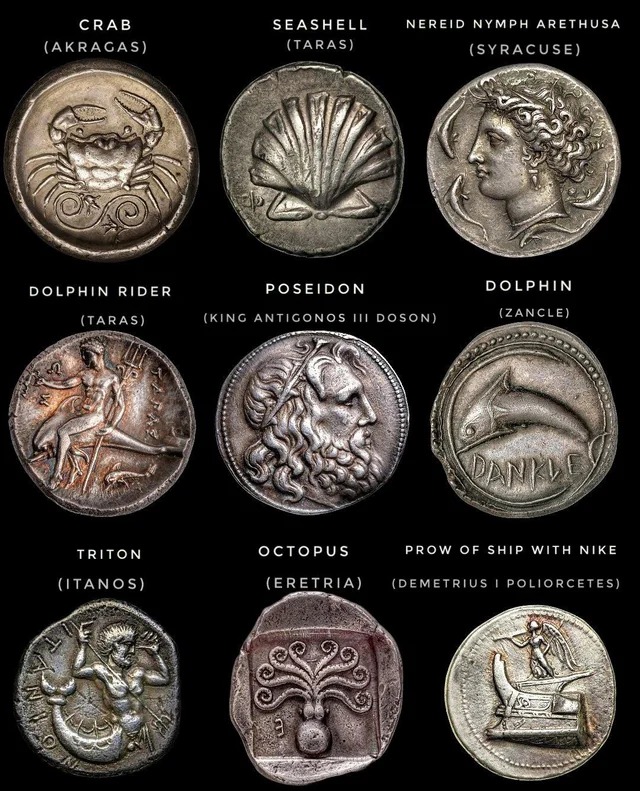
Today, rare ancient Greek coins are sought after by serious collectors, museums, historians, numismatists, and connoisseurs of historical art. From the iconic Athenian Owl tetradrachm to magnificent ancient Greek gold coins, silver drachms, tetradrachms, and Hellenistic royal coinage, Greek coins offer an extraordinary window into the civilizations of the ancient Mediterranean.
For collectors searching for ancient Greek coins for sale, understanding authenticity, rarity, condition, provenance, denomination, historical significance, and artistic quality is essential.
This complete guide explores the fascinating world of ancient Greek coin collecting, including the most famous Greek coins, ancient Greek silver coins, Greek gold coins, Alexander the Great coins, Greek mythology on coins, ancient Greek coin values, and what collectors should know before purchasing an ancient coin.
Ancient Greek coins were produced throughout the Greek world from the Archaic period through the Classical and Hellenistic periods and beyond.
Ancient Greece was not a single centralized nation issuing one national currency. Instead, hundreds of independent Greek city-states, kingdoms, and political authorities issued their own coinage.
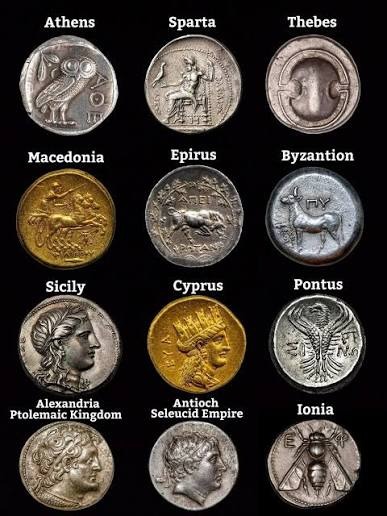
Athens, Corinth, Aegina, Syracuse, Rhodes, Thebes, Macedon, and numerous other centers developed distinctive coin designs and monetary standards.
This extraordinary diversity is one of the reasons ancient Greek coins remain such an important field of collecting.
A Greek coin can reveal the identity of a city, the authority of a ruler, a religious cult, a mythological tradition, or the political ambitions of an ancient kingdom.
Unlike modern coins, where designs are often standardized, ancient Greek coinage can contain remarkable variation between individual issues and even between individual dies.
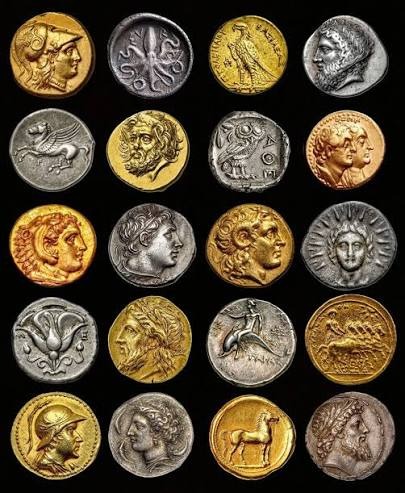
Greek coinage developed during a period of extraordinary political, economic, and artistic transformation.
The earliest Greek coinage emerged in the eastern Mediterranean during the Archaic period. Over subsequent centuries, coin production expanded throughout the Greek world and eventually accompanied Greek cultural influence across enormous territories.
Ancient Greek coinage is commonly studied through three broad periods.
The Archaic period represents the early development of Greek coinage.
Some early coins feature simple geometric designs, animals, symbols, or incuse patterns. As engraving techniques developed, coin designs became increasingly sophisticated.
Archaic Greek coins are particularly fascinating because they demonstrate the evolution of Greek artistic expression from relatively abstract imagery toward highly recognizable representations of gods, animals, heroes, and civic symbols.
For collectors interested in the origins of Greek coinage, rare Archaic Greek coins can be especially compelling.
The Classical period produced some of the greatest masterpieces of ancient numismatic art.
During the 5th and 4th centuries BC, Greek engravers created coins with remarkable portraits, anatomical detail, flowing hair, animals, gods, heroes, and complex mythological scenes.
Athens became particularly famous for its silver tetradrachms featuring Athena and the owl.
Syracuse in Sicily also produced extraordinary silver coinage, including highly artistic decadrachms that are regarded as some of the finest achievements in ancient Greek numismatic art.
For collectors searching for rare Classical Greek coins, artistry and condition can be particularly important.
The conquests of Alexander the Great transformed the ancient world.
Greek culture, language, political institutions, and monetary traditions spread across vast territories from the Mediterranean to Egypt and Central Asia.
The Hellenistic period subsequently produced an enormous variety of coinage.
Royal portraits became increasingly important. Kings and queens appeared on coins alongside gods, heroes, weapons, animals, and royal symbols.
The coinage of Alexander the Great, Lysimachus, the Seleucid kings, the Ptolemies, and other Hellenistic rulers remains among the most popular areas of ancient coin collecting.
Certain Greek coins have achieved almost legendary status among collectors.
The Athenian Owl tetradrachm is arguably the most recognizable ancient Greek coin.
The obverse generally depicts the helmeted head of Athena, the patron goddess of Athens. The reverse features an owl accompanied by an olive branch and inscriptions identifying Athens.
The owl became an enduring symbol of Athenian identity and wisdom.
Athenian silver tetradrachms circulated widely throughout the ancient Mediterranean and Near East. Their historical importance, recognizable imagery, substantial silver content, and fascinating variations make them one of the most popular categories for collectors of ancient Greek silver coins
Not every Athenian Owl is rare. Understanding the specific issue, date, style, condition, provenance, and variety is therefore essential when assessing an individual coin.
Alexander the Great coins are among the most sought-after ancient Greek coins.
Alexander’s famous silver tetradrachms commonly show the head of Herakles wearing the skin of the Nemean lion on the obverse and Zeus seated on the reverse.
His coinage became an enormous monetary phenomenon.
Importantly, not every coin bearing Alexander’s name was struck during his lifetime. Large numbers of Alexander-type coins were produced after his death by successor kingdoms and other authorities.
This distinction makes attribution, mint identification, dating, and specialist expertise particularly important.
For collectors, an exceptionally attractive and well-preserved Alexander the Great tetradrachm can be a centerpiece of an ancient Greek collection.
Ancient Greek gold coins occupy an especially prestigious position within ancient numismatics.
Gold staters and their fractions were produced by various Greek kingdoms and city-states and were generally associated with significant economic and political circumstances.
Ancient Greek gold coinage can feature rulers, gods, heroes, animals, and royal symbols.
Because exceptional gold coins can be extremely valuable, authenticity and provenance are particularly important when purchasing rare ancient Greek gold coins.
Silver was one of the most important metals in ancient Greek coinage.
The most familiar denominations include:
The drachm became one of the most influential monetary denominations in the Greek world.
The tetradrachm, equivalent to four drachms, is particularly popular among modern collectors.
Ancient Greek silver coins can range from relatively accessible examples to extremely rare and valuable masterpieces.
Collectors often seek Greek silver coins featuring:
The combination of silver, historical age, artistic design, and cultural significance makes ancient Greek silver coins one of the most fascinating areas of ancient numismatics.
Gold coinage represents another highly desirable category.
Ancient Greek gold coins include staters, half staters, thirds, and other denominations issued by various Greek authorities.
Some gold coins are associated with major rulers and historically significant periods.
For collectors looking for ancient Greek gold coins for sale, several factors should be examined carefully:
Authenticity: Is the coin genuine?
Weight: Does it correspond with the expected monetary standard?
Style: Does the engraving display the characteristics expected for the attributed mint and period?
Condition: Are the surfaces and devices well preserved?
Provenance: Can the previous ownership history be documented?
Attribution: Has the coin been correctly identified?
Documentation: Is there reliable supporting information?
A high-value ancient gold coin should ideally be purchased through a reputable specialist with appropriate expertise and documentation.
One of the most compelling reasons to collect ancient Greek coins is their extraordinary connection to mythology.
Ancient Greek coin engravers depicted many of the gods and heroes whose stories continue to influence literature, art, film, and popular culture.
Athena was the patron goddess of Athens and appears prominently on Athenian coinage.
Zeus, the supreme Olympian deity, frequently appears seated and holding symbols of divine authority.
Herakles is one of the most recognizable figures on ancient Greek coins. He is commonly depicted wearing the skin of the Nemean lion.
Apollo appears on numerous Greek and Hellenistic coin types and was associated with prophecy, music, healing, and religious traditions.
Artemis, goddess associated with hunting and the wilderness, appears on various Greek coin issues.
Nike personified victory and became a powerful symbol on ancient Greek coinage.
Poseidon, god of the sea, can be identified by his characteristic trident on various coin types.
For collectors, mythology adds another dimension to the study of ancient Greek coins. A coin can simultaneously be a monetary object, historical artifact, miniature sculpture, and representation of an ancient religious tradition.
Correct identification is one of the most important skills in ancient coin collecting.
When examining a Greek coin, start with the following characteristics.
Examine the principal side of the coin.
Look for:
The reverse may contain:
Ancient Greek inscriptions can provide crucial information.
They may identify a city, ruler, deity, magistrate, or political authority.
Understanding the Greek alphabet can greatly improve a collector’s ability to research ancient coins.
Weight can help establish the denomination and monetary standard.
However, weight alone cannot establish authenticity because sophisticated counterfeiters can reproduce ancient weights surprisingly accurately.
Measurements provide additional evidence for attribution.
Perhaps one of the most important characteristics is artistic style.
Experienced specialists can often recognize the distinctive engraving characteristics of different mints and periods.
One of the most frequently searched questions is:
How much are ancient Greek coins worth?
The answer varies enormously.
Ancient Greek coin values depend on a combination of factors.
Rarity is fundamental.
A common coin may have many surviving examples, while another issue may be represented by only a small number of known specimens.
But rarity should always be evaluated at the specific type and variety level.
Coins connected with major historical figures or periods can attract exceptional demand.
Coins associated with Alexander the Great, important Hellenistic rulers, famous Greek cities, or significant historical events can be particularly desirable.
Condition can dramatically affect value.
Collectors examine:
A rare coin in exceptional condition can be substantially more desirable than a worn example of the same type.
Greek coin engravers created miniature masterpieces.
A beautifully rendered portrait or exceptionally detailed mythological scene can make an otherwise similar coin significantly more desirable.
A documented ownership history can add both historical context and confidence.
For important ancient coins, provenance records may include previous auction appearances, collection references, invoices, certificates, and published literature.
Authenticity is non-negotiable.
A supposedly rare ancient Greek coin with questionable authenticity should never be treated as a genuine rarity.
Collectors searching for ancient Greek coins for sale should conduct careful due diligence.
Price should never be the only consideration.
Before purchasing, investigate:
Extremely rare coins offered at prices that seem too good to be true deserve particular caution.
The ancient coin market contains genuine masterpieces, but it also contains modern reproductions and altered examples.
Knowledge is therefore the collector’s greatest protection.
Generally, collectors should be extremely cautious about cleaning ancient coins.
Ancient surfaces and patinas can be an important part of a coin’s character.
Aggressive cleaning can permanently remove original surfaces and destroy fine details.
Harsh chemicals, abrasive tools, polishing, and inexperienced mechanical cleaning can significantly diminish a coin’s desirability.
Valuable ancient Greek coins should be evaluated by qualified professionals before any conservation treatment is undertaken.
Provenance has become an increasingly important subject in the ancient coin market.
A coin’s ownership history can help establish its collecting history and provide valuable historical context.
For significant purchases, collectors should preserve documentation such as:
A well-documented coin is not merely easier to research; its documentation becomes part of the historical record surrounding the object.
Exceptional ancient Greek coins occupy a distinctive position at the intersection of history, art, rarity, precious metals, and luxury collecting.
The finest specimens can possess qualities that distinguish them from ordinary historical objects: exceptional rarity, extraordinary artistic execution, famous historical associations, precious-metal content, and documented provenance.
For sophisticated collectors, the attraction is often not simply the intrinsic value of silver or gold.
It is the combination of:
Rarity + History + Art + Provenance + Craftsmanship + Cultural Significance
That combination gives exceptional ancient Greek coins their enduring appeal.
Nevertheless, ancient coins should be approached primarily as collectible historical objects. Market prices can fluctuate, and there is no guarantee that a particular coin will increase in value.
A collector does not need to begin with the rarest or most expensive Greek coin.
A focused collecting strategy can often be more rewarding.
Consider collecting by:
Build a collection around Athens, Corinth, Syracuse, Rhodes, Aegina, or another ancient Greek mint.
Collect coins associated with Alexander the Great or a particular Hellenistic dynasty.
Specialize in ancient Greek gold coins or ancient Greek silver coins.
Collect coins depicting Athena, Zeus, Herakles, Apollo, Artemis, Nike, Poseidon, or other mythological figures.
Build a collection around drachms, tetradrachms, staters, or decadrachms.
Focus on exceptional portraits, master engravers, or particular artistic periods.
A focused collection provides a clear intellectual framework and encourages deeper research.
There are many reasons people collect ancient Greek coins.
Some are fascinated by history.
Others appreciate ancient art.
Some are interested in Greek mythology.
Others enjoy the challenge of attribution and research.
For many collectors, however, the greatest attraction is the physical connection with antiquity.
A genuine ancient Greek coin was created more than two millennia ago.
It passed through the hands of people whose names may never be known.
It may have traveled between cities, markets, armies, temples, ports, and kingdoms.
Eventually, after surviving centuries underground or in collections, it entered the modern world.
That continuity is extraordinary.
For collectors seeking exceptional examples of ancient Greek coins, House of Emirates® represents a world where ancient numismatics meets sophisticated collecting.
Our approach centers on the appreciation of coins as exceptional historical and artistic objects, with particular attention to rarity, authenticity, condition, provenance, and cultural significance.
From rare ancient Greek silver coins and historic tetradrachms to exceptional ancient Greek gold coins, each important piece represents a surviving fragment of the ancient world.
For the discerning collector, acquiring an ancient Greek coin is not simply purchasing an old coin.
It is acquiring a surviving work of ancient craftsmanship.
It is holding a physical object created by a civilization whose influence continues to shape the modern world.
And it is becoming the temporary custodian of an object that has already survived more than two thousand years.
The most valuable ancient Greek coins tend to combine exceptional rarity, historical importance, superb artistic quality, outstanding condition, and strong provenance. Famous examples can include exceptional Syracusan decadrachms, rare Greek gold staters, important royal coinage, and extraordinary examples associated with major historical figures.
The Athenian Owl tetradrachm is arguably the most recognizable ancient Greek coin. Its image of Athena and the owl became one of the defining designs of ancient Greek coinage.
Many ancient Greek coins were struck in precious metals including silver and gold. Silver tetradrachms were particularly important, while gold staters and related denominations were produced by various Greek rulers and authorities.
Some Alexander-type coins are relatively common, while specific varieties, mints, exceptional specimens, and coins with important provenance can be considerably rarer. Identification of the exact issue is therefore essential.
Authenticity requires examination of multiple characteristics including style, fabric, weight, dimensions, surfaces, die characteristics, manufacture, and provenance. For valuable coins, professional specialist evaluation is strongly recommended.
Ancient Greek coins can be highly desirable collectible assets, but they should not be viewed as guaranteed investments. Prices depend on rarity, quality, authenticity, provenance, market demand, and many other factors.
Collectors can acquire ancient Greek coins through established specialist dealers, reputable auction houses, and recognized numismatic channels. When purchasing significant coins, reputation, authenticity guarantees, provenance, documentation, and applicable legal requirements should be carefully considered.
Ancient Greek coins are among the world’s most remarkable surviving objects from antiquity.
They are simultaneously currency, sculpture, historical evidence, political communication, religious imagery, and works of art.
The Athenian Owl tells the story of one of antiquity’s greatest city-states.
Alexander’s coinage reflects the extraordinary expansion of a Macedonian king whose conquests transformed the ancient world.
Hellenistic royal portraits reveal the evolution of political imagery.
Greek gold staters demonstrate the wealth and ambition of ancient kingdoms.
Silver tetradrachms reveal the sophistication of ancient monetary systems and Mediterranean commerce.
For today’s collector, every genuine ancient Greek coin offers an opportunity to explore another chapter of history.
The deeper one travels into Greek numismatics, the more fascinating the subject becomes.
Rare ancient Greek coins are not merely old coins. They are surviving witnesses to antiquity — miniature masterpieces that have crossed more than two thousand years to reach the modern collector.
At House of Emirates®, that extraordinary connection between past and present is at the heart of the collecting experience.
House of Emirates® — London
Where Eternity Becomes a Luxury Asset.