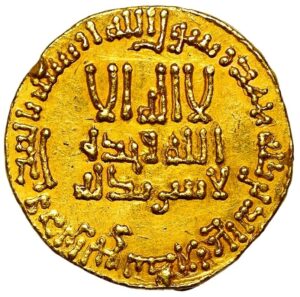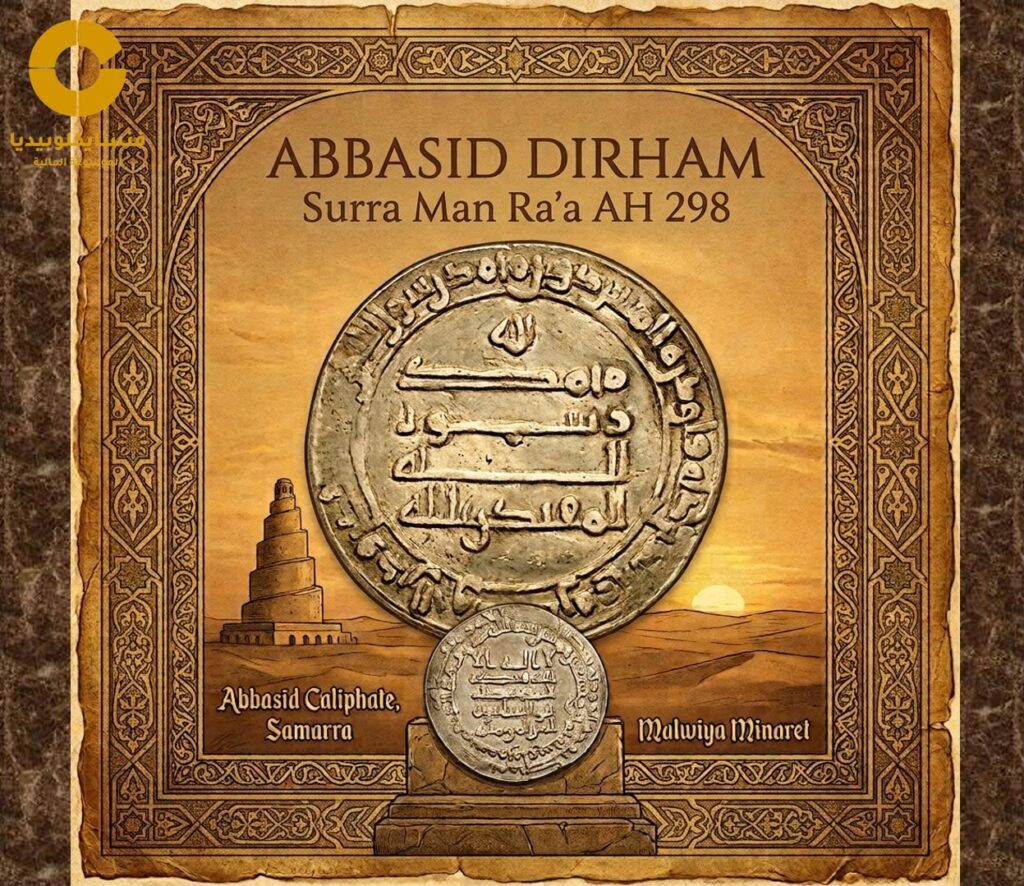
Perhaps one of the most extraordinary chapters in the history of the Islamic Abbasid Silver dirham is its journey from the Islamic world into the Viking lands of Northern and Eastern Europe. Between the eighth and eleventh centuries, enormous quantities of Islamic silver coins travelled thousands of kilometres along the commercial networks connecting the Middle East, Central Asia, the Caspian region, the Volga River and the Baltic Sea. Among the most important of these coins were Abbasid silver dirhams, which became a highly valued form of silver within the Viking Age economy.
The Vikings did not generally acquire Abbasid dirhams through direct voyages from Scandinavia to Baghdad. Instead, the coins moved through an extensive chain of merchants, markets and trading settlements. Silver produced and minted in the Islamic world could travel east and north through Central Asian and Eurasian trade routes before reaching the great river systems of Eastern Europe. The Volga River, in particular, became one of the great arteries of this international trade. From the Caspian region, merchants could travel northwards toward major trading centers such as Bulgar on the Volga, while networks extending toward the Dnieper and Baltic connected the Islamic world with Scandinavian commercial centers.
This trade transformed the Abbasid dirham into one of the most recognizable forms of foreign silver found in the archaeological record of the Viking Age.
The answer lies principally in the economic properties of silver.
The Viking Age economy was heavily dependent on precious-metal currency and bullion. Unlike modern monetary systems, medieval economies frequently used silver not only as coined money but also as a commodity whose value could be determined by weight. A silver coin did not necessarily need to circulate according to its original denomination. It could be weighed, exchanged, accumulated, cut or sometimes melted down.
This made the Abbasid silver dirham particularly useful.
Its relatively high silver content, standardized form and recognition across extensive trading networks gave it significant economic utility. Viking merchants could use Islamic dirhams in transactions, accumulate them as wealth or treat them as portable silver bullion. Archaeological discoveries demonstrate just how extensive this phenomenon became. Large quantities of Islamic silver coins have been recovered throughout Scandinavia, the Baltic region and Eastern Europe, with particularly important concentrations in modern Sweden and on the island of Gotland.
The presence of these coins thousands of kilometres from the Abbasid heartlands provides extraordinary physical evidence of the interconnectedness of the medieval world.
The Viking Age was not an isolated Scandinavian phenomenon. Norse merchants operated within enormous international networks that connected northern Europe with the Byzantine Empire and the Islamic world.
Two major routes were particularly important.
The Volga trade route connected Scandinavia with the Caspian Sea and the Islamic markets of Central Asia and the Middle East. Scandinavian traders, often referred to broadly as Rus’ in Eastern sources, established commercial settlements along the route and participated in trade involving silver, furs, slaves, wax, honey and other valuable commodities.
The Dnieper route provided another major connection between the Baltic and the Black Sea, eventually linking the Scandinavian world with Constantinople and the Byzantine Empire.
Through these networks, Islamic silver travelled north while Scandinavian and Eastern European commodities moved south. The result was a remarkable medieval exchange system in which a silver coin struck in an Abbasid mint could eventually end up in a Scandinavian hoard.
One of the most spectacular forms of evidence comes from Viking Age silver hoards.
Across Scandinavia and the Baltic region, archaeologists have discovered hoards containing hundreds and sometimes thousands of silver objects. These collections can include Islamic dirhams, European coins, ornaments, hacksilver and fragments of silver objects. The Islamic coins are particularly valuable to historians because many carry readable dates and mint names.
A single Abbasid dirham can therefore provide considerably more chronological information than an undated piece of hacksilver. When hundreds of such coins occur together, they can help reconstruct the chronology and direction of medieval trade.
The island of Gotland is especially famous for its extraordinary archaeological record of Viking Age silver. Its geographical position in the Baltic made it an important center within the trading networks connecting Scandinavia, Eastern Europe and the wider Eurasian world. The sheer quantity of Islamic silver discovered in Scandinavian contexts demonstrates that the flow of silver was not an isolated curiosity. It was part of a sustained economic phenomenon lasting generations.
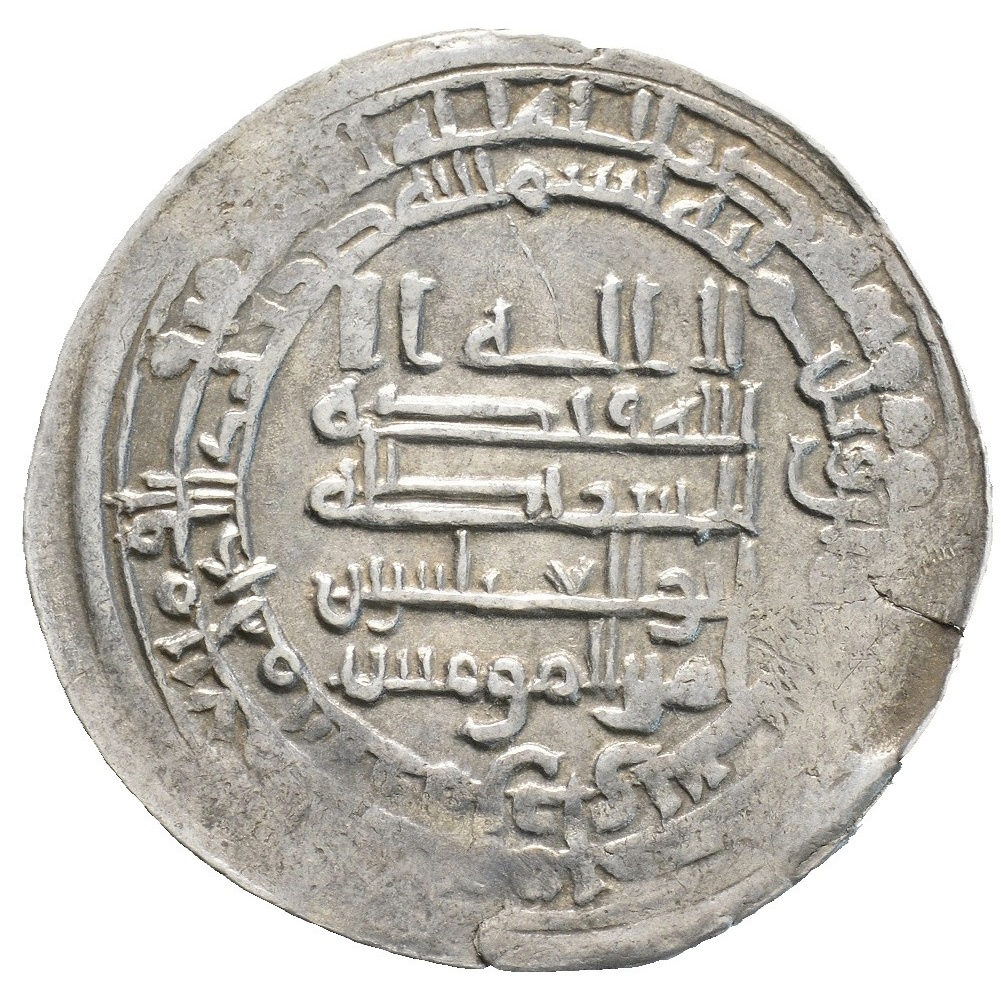
The idea that Vikings simply “used” Abbasid dirhams as ordinary coins can be misleading.
The Viking economy frequently operated according to a weight-based silver system. A merchant could assess the value of silver according to weight and purity rather than relying exclusively on the denomination stamped on a coin.
Consequently, an Abbasid dirham might remain intact as a recognizable coin, but it could also become part of a larger silver payment. Coins could be weighed alongside other silver objects. Pieces of silver jewellery, ingots and fragments of coins could all function as forms of bullion.
This practice is often described as the hacksilver economy.
The discovery of clipped, fragmented or pierced Islamic coins provides evidence that silver was not always treated as sacred monetary objects. Its material value could be more important than the original political identity of the coin.
Yet the survival of enormous numbers of intact Abbasid dirhams also demonstrates that the coins themselves retained considerable importance.
Abbasid dirhams provide a rare window into a commercial world that otherwise left relatively few written records.
A Viking silver hoard can contain coins originating from different regions and periods, effectively creating a miniature map of medieval international commerce.
An Abbasid dirham may reveal:
The ruler: identifying the caliph under whose authority it was struck.
The date: allowing researchers to establish when the coin entered circulation.
The mint: providing evidence of its geographic origin.
The inscription: revealing religious, political and administrative information.
The metal: demonstrating the movement of precious silver across continents.
When thousands of such coins are studied collectively, they become evidence for the scale and direction of medieval trade.
This is one reason Abbasid numismatics is so important to historians of the Viking Age.
The journey of an Abbasid dirham is extraordinary to contemplate.
A coin could be struck in a mint somewhere within the vast Abbasid economic sphere, circulate through markets in the Middle East or Central Asia, pass through merchants operating along the Caspian and Volga routes, and eventually reach a Scandinavian trading settlement. It could then be exchanged, accumulated as wealth, placed inside a hoard or eventually buried in the ground.
Centuries later, an archaeologist could uncover that same piece of silver in Sweden, Gotland or another part of the Baltic world. The coin would have travelled farther than most people of its age could have imagined.
This is what makes the Abbasid silver dirham and the Vikings such a compelling historical subject. The coins provide tangible evidence that the medieval world was far more interconnected than the modern imagination sometimes assumes.
The availability of eastern silver appears to have played an important role in the economic development of Viking Age societies. Silver could be accumulated as portable wealth, used in trade and transformed into jewellery and other valuable objects. The enormous quantities of Islamic silver reaching northern Europe demonstrate that Scandinavian societies were integrated into wider Eurasian markets.
The flow was not necessarily constant. Archaeological evidence indicates fluctuations in the arrival of Islamic silver over time, reflecting changing political and economic circumstances in Central Asia, the Islamic world and the northern trade networks. Periods of abundant eastern silver were followed by periods when the flow diminished.
These changes are important because they demonstrate that the Viking economy was connected to developments occurring far beyond Scandinavia. A political change in the Islamic world could ultimately influence the availability of silver thousands of kilometres away.
The Viking story gives the Abbasid dirham a significance far beyond its original monetary function.
It was simultaneously a product of the Islamic monetary system, a commodity in Eurasian commerce, a source of wealth for Scandinavian traders and, eventually, an archaeological record of one of history’s great trading networks.
Few ancient coins demonstrate globalization on such a tangible scale.
The Abbasid silver dirham began its life as an official coin of an Islamic caliphate. Yet its journey did not end at the borders of the Abbasid world. It crossed deserts, mountains, rivers and seas before reaching markets and communities in Northern Europe.
Today, every surviving Abbasid dirham discovered in a Viking context carries this extraordinary story within it.
Its Arabic inscriptions connect it to the Islamic world. Its archaeological context connects it to the Viking Age. Its silver connects the two. In this sense, the Abbasid dirham became much more than currency. It became one of the physical links between the civilizations of the medieval Islamic world and Northern Europe.
The discovery of these coins in Viking hoards remains one of the most compelling pieces of evidence for the scale of medieval Eurasian trade and for the extraordinary economic reach of Abbasid silver coinage.
For modern historians, archaeologists and specialists in ancient Islamic coins, the Viking connection is therefore indispensable to understanding the true historical importance of the Abbasid dirham.
@The article poster is from fincyclopedia