Description
Russian Silver Rouble 1897 АГ – Nicholas II (1894–1917) | Defaced Imperial Portrait: An Act of Defiance and Revolutionary Protest
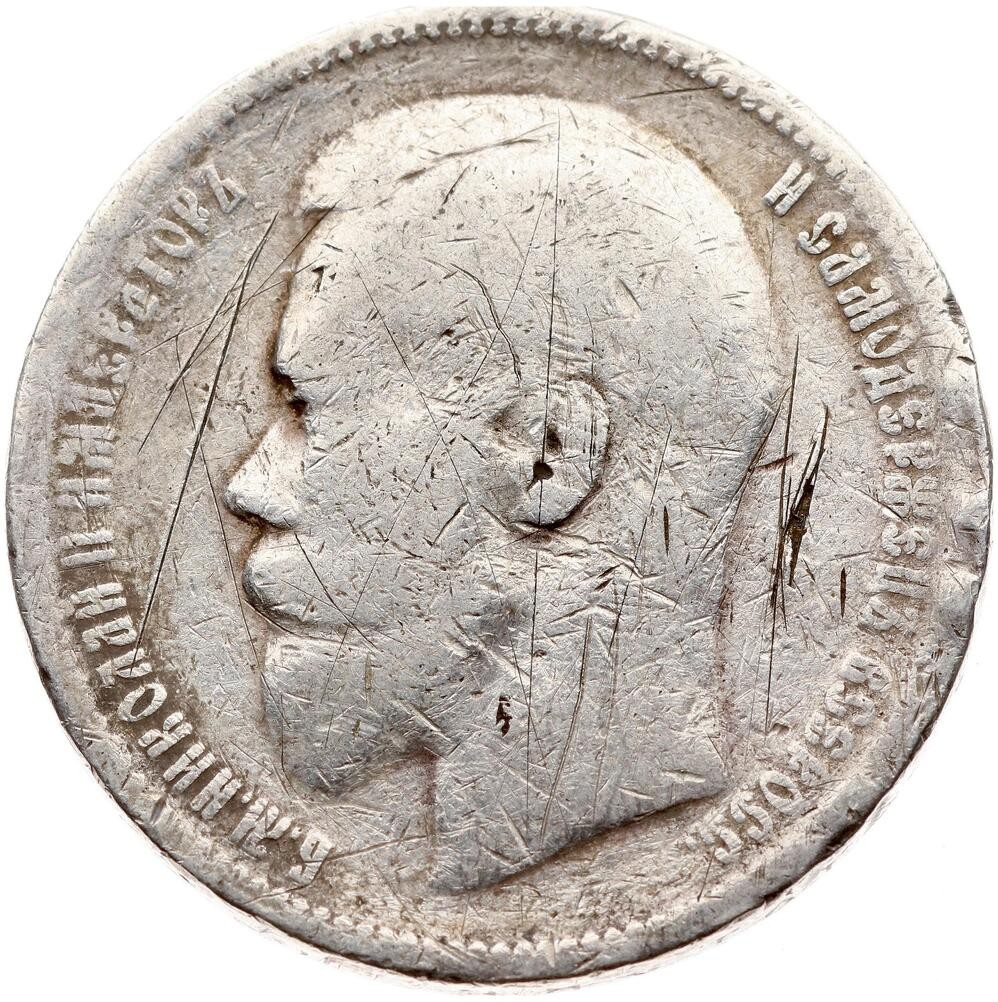
House of Emirates® in London is thrilled to offer its elite clientele this exceptionally intriguing Russian Imperial silver rouble, struck in 1897 at the prestigious St. Petersburg Mint during the reign of Tsar Nicholas II (1894–1917), the last Emperor of Russia. Bearing the imperial mintmaster initials А.Г. (Александр Грасс), this historic silver coin carries an extraordinary feature that distinguishes it from an ordinary example of late nineteenth-century Russian coinage: extensive scratches deliberately appearing across the portrait of the Tsar.
The imperial portrait bears distinctive, visible knife marks, with deep incisions crossing the face of Tsar Nicholas II. These deliberate cuts appear to represent more than ordinary circulation wear, raising the possibility that the coin was subjected to an intentional act of defacement. Such an attack on the monarch’s portrait may have served as a powerful expression of political dissatisfaction, personal defiance or revolutionary protest against the authority of the Russian Empire. Although the precise circumstances and motives behind the act remain unknown, the physical presence of the knife-like marks gives this particular specimen a compelling historical dimension. It invites us to consider whether an individual, during a period of growing opposition to Tsarist rule, deliberately used a monetary object to express hostility towards the imperial institution. The coin thus offers a fascinating intersection of numismatic history, political symbolism and the revolutionary tensions that would ultimately transform Russia in the early twentieth century.
With a recorded weight of 19.33 grams, this silver rouble is a tangible survivor of the final decades of the Romanov dynasty.
The obverse features the left-facing portrait of Tsar Nicholas II, surrounded by the traditional Russian imperial inscription identifying him as Emperor and Autocrat of All Russia. The portrait displays the Tsar’s distinctive facial features, moustache and imperial appearance, while the surrounding lettering establishes the authority and identity of the reigning monarch.
What makes this particular specimen especially thought-provoking is the network of visible scratches crossing the imperial face. Their concentration across the portrait raises the possibility of intentional defacement rather than ordinary circulation wear. Throughout history, portraits of monarchs and political leaders have represented more than individual personalities: they have embodied the authority, legitimacy and permanence of the state. Deliberately damaging such an image could therefore have carried a symbolic meaning, transforming an ordinary monetary object into a personal statement of dissent.
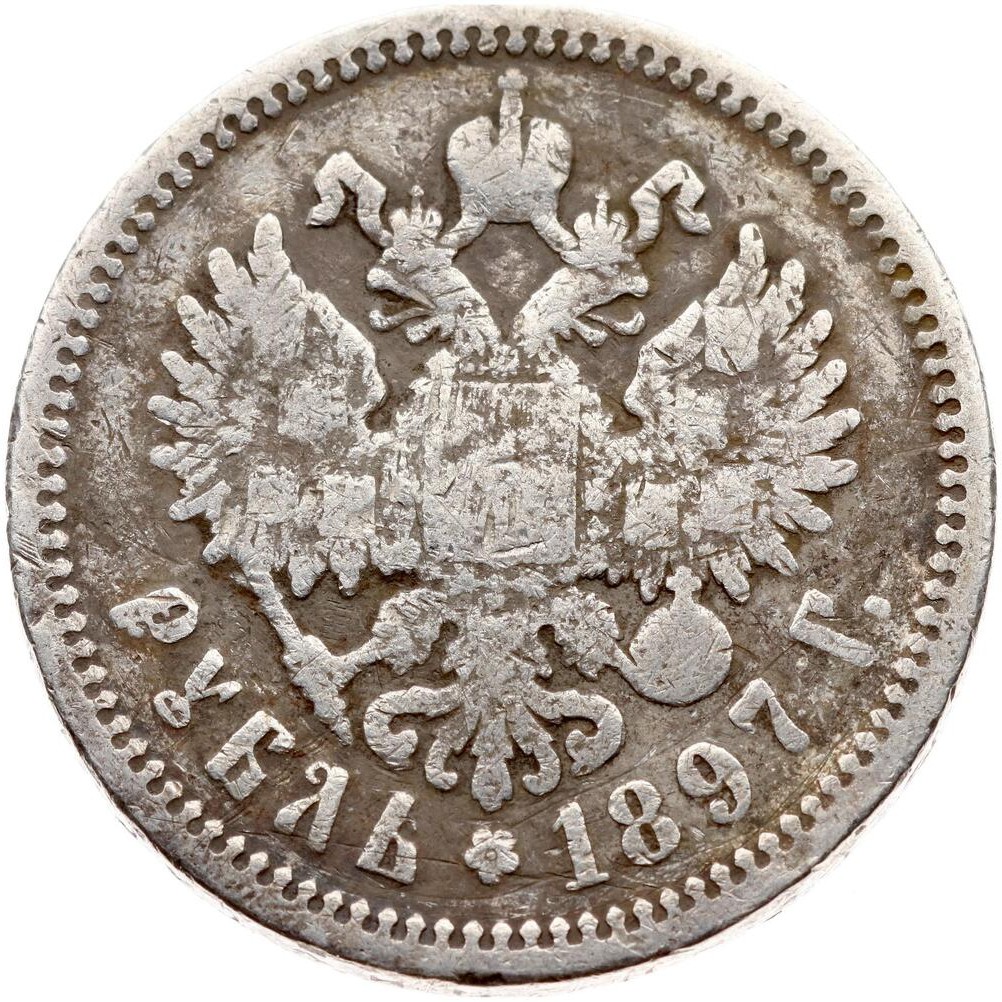
The reverse displays the magnificent crowned double-headed eagle of the Russian Empire, with its outstretched wings, heraldic shields, imperial regalia, sceptre and orb. The central shield features the traditional image of Saint George slaying the dragon, surrounded by the elaborate heraldic composition representing the territories of the Empire.
The denomination РУБЛЬ and the year 1897 appear beneath the imperial emblem, completing the impressive design. The contrast between the damaged imperial portrait and the surviving grandeur of the imperial coat of arms makes this Silver Rouble coin particularly compelling: one side raises the possibility of resistance against the monarch, while the other preserves the powerful symbolism of the empire he ruled.
The year 1897 belongs to a consequential period in Russian history. Tsar Nicholas II had ascended the throne in 1894, inheriting an enormous empire undergoing industrial expansion, economic transformation and growing political unrest. The monetary reforms associated with Finance Minister Sergei Witte culminated in the establishment of the gold standard in 1897, strengthening the foundations of Russia’s modern monetary system. Yet beneath the appearance of imperial strength, social inequality, labour unrest and political opposition were intensifying. The revolutionary events of 1905 and the eventual collapse of the Romanov monarchy in 1917 would fundamentally change the course of Russian and European history.
House of Emirates® in London is pioneering a new frontier in the global luxury market, redefining rare and ancient gold and silver coins as an entirely new class of luxury assets. By bringing extraordinary historical treasures into the luxury world, House of Emirates® is transforming how a new generation of discerning luxury buyers perceive, experience and own tangible assets of exceptional historical, cultural and artistic significance.
This 1897 Russian silver rouble is not merely a surviving example of imperial coinage; it is a tangible connection to the final generation of Romanov rule, carrying a visible feature that invites historical investigation and interpretation.
House of Emirates® — London — Where Eternity Becomes a Luxury Asset