Description
Umayyad Silver Dirham of Caliph Hisham ibn Abd al-Malik — Wasit Mint, 121 AH (738–739 AD)
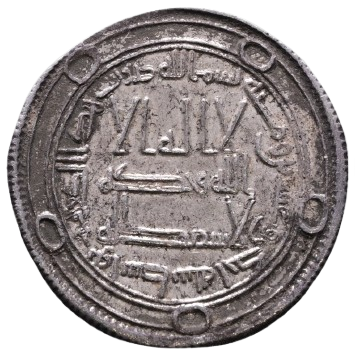
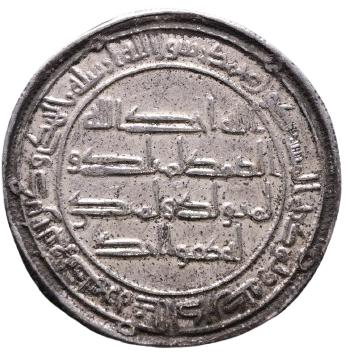
House of Emirates® in London is thrilled to offer its elite clientele this majestic Umayyad silver dirham, struck in 121 AH (738–739 AD) at the celebrated mint of Wasit, Iraq, during the reign of Caliph Hisham ibn Abd al-Malik (724–743 AD). Dating back almost 1,290 years, this remarkable Islamic silver coin represents an extraordinary tangible connection to one of the most influential periods in the history of the Islamic world. Measuring approximately 25 mm in diameter and weighing 3.2 grams, this historic dirham preserves the remarkable artistry of early Islamic calligraphy and the distinctive monetary identity of the Umayyad Caliphate.
The year 121 AH corresponds to 738–739 AD, a period during which the Umayyad Caliphate was governed by Hisham ibn Abd al-Malik, the tenth Umayyad caliph. His reign, extending from 105 to 125 AH (724–743 AD), was one of considerable administrative activity and political importance. The Umayyad dynasty, which had established its capital in Damascus, presided over an enormous empire stretching across North Africa, the Iberian Peninsula, the Middle East and into Central Asia. Its monetary system played a vital role in facilitating commerce, taxation and administration across territories separated by vast distances.
Wasit, the mint city identified on this remarkable dirham, was founded in Iraq by the Umayyad governor al-Hajjaj ibn Yusuf during the late seventh century AD. Strategically positioned between Kufa and Basra, Wasit developed into an important administrative, military and commercial centre. Its mint became particularly significant in the production of Umayyad silver dirhams, which circulated throughout the Islamic territories and beyond. The presence of the Wasit mint inscription gives this coin an important geographical and historical identity, connecting it directly to the economic infrastructure of the Umayyad Empire.
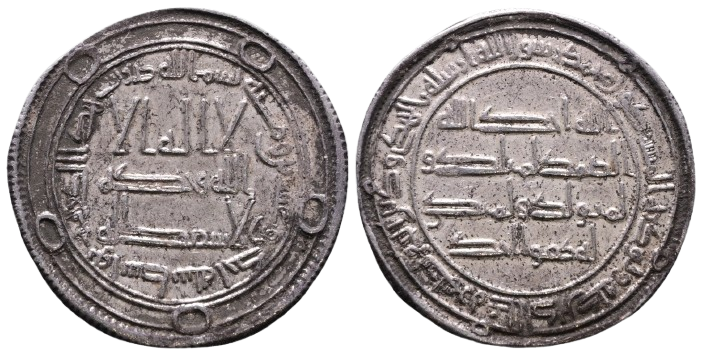
This Islamic Umayyad Dirham follows the celebrated post-reform Islamic monetary tradition introduced under Caliph Abd al-Malik ibn Marwan, which replaced earlier figural designs with elegant Arabic inscriptions and religious declarations. Its obverse displays the Islamic declaration of faith, affirming the oneness of Allah, surrounded by inscriptions identifying the mint of Wasit and the year of issue, 121 AH.
The reverse features the profound Quranic declaration from Surah Al-Ikhlas (Chapter 112), affirming the absolute unity and uniqueness of Allah, accompanied by a marginal inscription referencing the prophetic mission of Muhammad, peace be upon him. The disciplined arrangement of Arabic calligraphy, circular borders and decorative devices gives the dirham its distinctive early Islamic appearance.
Beyond its monetary function, this Umayyad silver dirham represents an extraordinary surviving artefact from a formative chapter of Islamic civilisation. It embodies the intersection of religious identity, political authority, monetary innovation and international commerce. At a time when silver dirhams served as an important medium of exchange across extensive trade networks, coins such as this connected merchants, cities and distant territories through a shared monetary standard.
For today’s discerning luxury buyers and investors in historical tangible assets, this nearly thirteen-century-old silver dirham offers something that contemporary luxury products cannot replicate: genuine historical provenance through its inscriptions, an identifiable ruler, a documented mint and a precisely dated issue. It is a remarkable example of early Islamic numismatic heritage and an enduring expression of the artistic and cultural legacy of the Umayyad Caliphate.
Historical Specifications
- Ruling Caliph: Hisham ibn Abd al-Malik
- Dynasty: Umayyad Caliphate
- Denomination: Silver Dirham
- Mint: Wasit, Iraq
- Date: 121 AH
- Gregorian Date: 738–739 AD
- Metal: Silver
- Weight: 3.2 grams
- Diameter: 25 mm
- Period: Early Islamic Period
- Historical Era: Umayyad Dynasty (661–750 AD)
House of Emirates® in London is pioneering a new frontier in the global luxury industry, creating an entirely new class of luxury assets by positioning rare and ancient gold and silver coins as exceptional luxury products. Through its visionary approach, House of Emirates® is bridging the worlds of ancient heritage, precious metals, historical significance and contemporary luxury, transforming centuries-old treasures into highly distinctive tangible assets for a new generation of sophisticated luxury buyers and investors. By challenging traditional perceptions of luxury and introducing historical coins into the international luxury marketplace, House of Emirates® is redefining how exceptional treasures are valued, presented, experienced and owned. This pioneering vision represents a bold new chapter in the evolution of the global luxury industry.
House of Emirates® — London — Where Eternity Becomes a Luxury Asset