London – UK
How Ancient Civilisations Transformed Gold and Silver into Extraordinary Masterpieces of Art, Power and Eternal Heritage
Long before modern banking systems, digital currencies and sophisticated financial markets, ancient civilisations had already mastered an extraordinary art: transforming precious metals into objects that represented wealth, authority, political power and cultural identity.
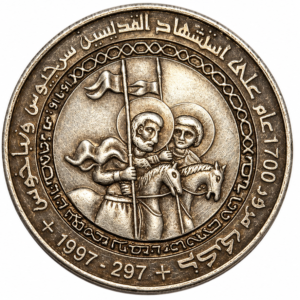
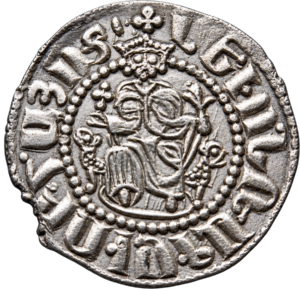
Ancient coin minting was far more than a monetary process. It was a remarkable combination of metallurgy, artistic craftsmanship, engineering and political expression. From the magnificent gold staters of ancient Greece to the imperial denarii of Rome, the magnificent gold solidi of Byzantium and the distinguished Islamic gold dinars, ancient coins became miniature masterpieces that travelled across continents, witnessed the rise and fall of empires and survived for thousands of years. Today, these exceptional historical objects are recognised not only for their precious metal content but also for their rarity, artistic merit, historical significance and enduring appeal among investors and enthusiasts of ancient heritage.
At House of Emirates® in London, we believe that understanding the ancient art of coin minting reveals something extraordinary: the greatest treasures of human civilisation were sometimes created in the smallest forms.
The earliest widely recognised coinage emerged in Lydia, in western Anatolia, during the seventh century BC. These early coins were made from electrum, a naturally occurring alloy of gold and silver, and frequently carried official stamps identifying their issuing authority. This development represented a revolutionary transformation in the history of trade and economic exchange. Rather than weighing precious metal for every transaction, people could increasingly rely on standardised pieces whose authenticity and weight were recognised within established trading networks.
The Greeks subsequently elevated coin production into an extraordinary artistic discipline. Their gold and silver coins featured gods, goddesses, mythological creatures, military symbols and representations of powerful city-states. The famous Athenian tetradrachm, bearing the image of Athena on one side and her sacred owl on the other, became one of antiquity’s most recognisable monetary designs. These coins were simultaneously instruments of commerce, declarations of civic identity and expressions of artistic excellence.
As coinage spread throughout the Mediterranean and beyond, successive civilisations developed distinctive minting traditions. Coins became historical documents in precious metal, revealing the political ambitions, religious beliefs, economic structures and artistic achievements of the societies that produced them.
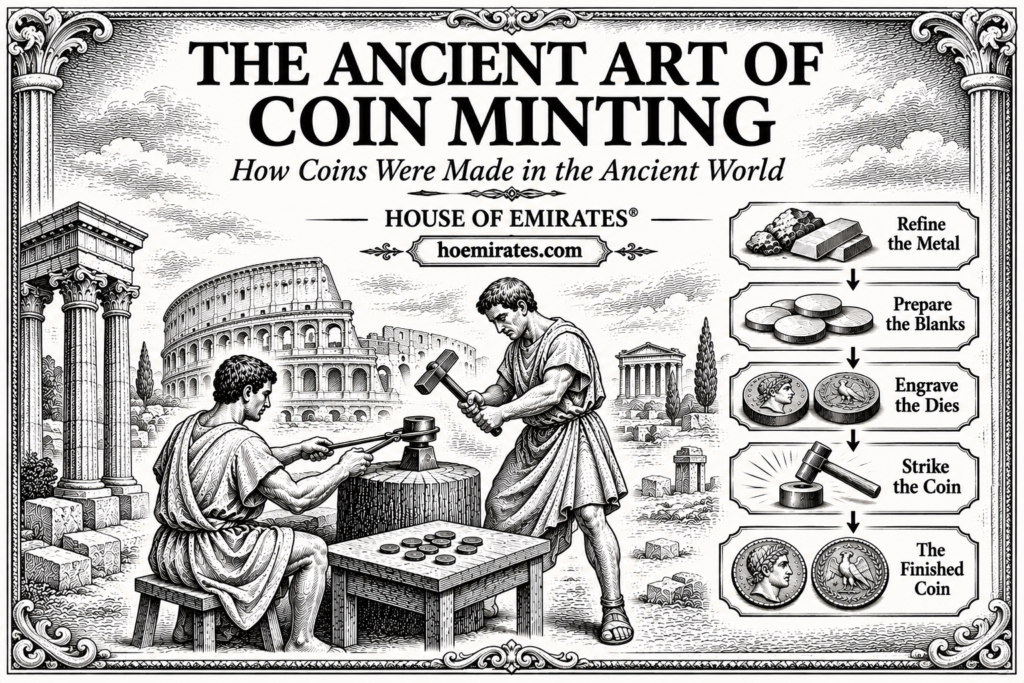
Ancient coin production required considerable technical expertise. Unlike modern coins manufactured through sophisticated industrial presses, most ancient coins were produced using manually operated tools, carefully prepared metal blanks and engraved dies.
The process generally began with the preparation of precious metal. Gold, silver or bronze was melted and refined according to the mint’s requirements. The metal was then measured and formed into individual blanks, commonly known as flans. These blanks were heated when necessary to make the metal more workable before being positioned between two engraved dies.
A skilled mint worker would strike the upper die with a heavy hammer, transferring the engraved design onto the metal blank. The resulting impression created the coin’s principal imagery, inscriptions and identifying symbols. The precision of the engraver, the quality of the metal, the alignment of the dies and the force of the strike all influenced the final result.
Every ancient hand-struck coin was therefore the product of human craftsmanship. Minor variations in weight, alignment, engraving and striking created individual characteristics that make ancient numismatics particularly fascinating. Some coins exhibit extraordinary portraiture, delicate lettering and intricate decorative details, while others reveal imperfections that provide valuable evidence of historical minting practices.
The engravers responsible for these miniature works of art were highly skilled artisans. Their work captured the likenesses of rulers, emperors and religious figures with remarkable sophistication, sometimes creating portraits that remain recognisable more than two millennia later.
The Roman Empire transformed coin production into one of the most influential monetary systems of the ancient world. Roman mints produced vast quantities of gold aurei, silver denarii and bronze denominations that circulated across an extensive territory stretching from Britain to the Middle East and North Africa.
Roman coins were instruments of imperial communication. The portraits of emperors, military victories, religious ceremonies and political achievements appeared on their surfaces, allowing imperial messages to circulate throughout the empire. A gold aureus bearing the portrait of an emperor was not merely a valuable monetary object; it was also a symbol of sovereignty and political legitimacy.
Roman gold coinage demonstrated impressive metallurgical and artistic capabilities. Portraits of Julius Caesar, Augustus, Nero, Trajan, Hadrian and Constantine provide an extraordinary visual record of imperial history. Each surviving coin offers an opportunity to examine the evolution of Roman political imagery, artistic conventions and monetary policy.
For modern investors interested in historical assets, Roman gold coins represent a fascinating intersection of precious metal, rarity, provenance and historical significance. Their value, however, depends on numerous factors, including authenticity, condition, scarcity, historical importance and documented provenance rather than gold content alone.
Following the transformation of the Roman Empire, the Byzantine Empire continued the remarkable tradition of imperial gold coinage. Among its most celebrated achievements was the gold solidus, a highly respected monetary standard that maintained an important role in international commerce for centuries.
Introduced under Constantine I in the fourth century AD, the solidus became renowned for its relatively consistent gold content and widespread acceptance. Byzantine gold coins frequently displayed imperial portraits, Christian symbolism, crosses and religious inscriptions, reflecting the distinctive cultural and political identity of the Eastern Roman Empire.
Their circulation extended well beyond Constantinople, reaching commercial centres across Europe, the Mediterranean and parts of Asia. The survival of Byzantine gold solidi provides compelling evidence of the economic networks and political influence maintained by the empire.
These coins are particularly important to ancient numismatics because they demonstrate how monetary standards, artistic traditions and imperial authority could endure despite profound political and social changes.
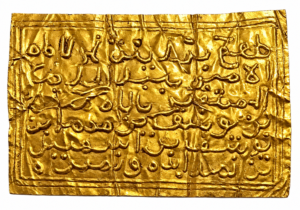
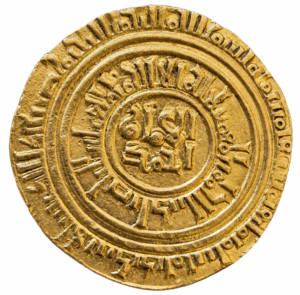
The emergence of Islamic gold coins introduced another remarkable chapter in the history of ancient minting. During the Umayyad Caliphate, under Caliph Abd al-Malik ibn Marwan, a major monetary reform established a distinctive Islamic gold dinar in 77 AH (696–697 AD).
Unlike many earlier imperial coins that featured rulers and figurative imagery, the reformed Islamic dinar adopted an epigraphic design dominated by Arabic inscriptions and religious declarations. This represented a significant artistic and ideological transformation in the history of monetary design.
The gold dinar became an important monetary instrument throughout the Islamic world and beyond. Subsequent Abbasid, Fatimid and other Islamic dynasties developed their own coinage traditions, with inscriptions recording rulers, mint locations, dates and religious expressions.
Today, surviving Islamic gold dinars offer invaluable insights into the political history, economic development, calligraphy and cultural achievements of successive Islamic civilisations. Their inscriptions can provide historical information that is difficult to obtain from other surviving artefacts.
One of the most extraordinary characteristics of ancient coins is their ability to survive the civilisations that created them. Empires disappeared, capitals were destroyed, dynasties collapsed and political boundaries changed, yet millions of ancient coins continued to exist beneath the earth, within archaeological sites, in old collections and in the hands of successive generations.
Their survival is partly explained by the durability of precious metals. Gold is highly resistant to corrosion, while silver can also survive for centuries under favourable conditions, although it is susceptible to tarnishing and chemical reactions. Many ancient coins were buried, lost during travel, deposited as offerings or deliberately concealed during periods of political instability.
Archaeological discoveries have consequently revealed extraordinary collections of Roman, Greek, Byzantine and Islamic coins, allowing historians and numismatists to reconstruct aspects of ancient trade, monetary circulation and political history.
Each authentic ancient coin is therefore more than a surviving monetary object. It is a tangible connection to a world that would otherwise exist primarily through written records, archaeological remains and historical interpretation.
In the contemporary luxury market, ancient coins occupy a distinctive position at the intersection of history, craftsmanship, precious metals and rarity. Unlike newly manufactured luxury products, authentic ancient coins possess an intrinsic historical dimension that cannot be recreated.
Their significance is determined by several considerations: historical period, issuing authority, rarity, mint, metal composition, preservation, artistic quality, authenticity and provenance. Two coins from the same historical period may have substantially different market values because of differences in scarcity, condition and historical importance.
For investors considering ancient coins, professional authentication, reputable sourcing, transparent provenance and appropriate conservation are essential. Historical significance does not guarantee investment appreciation, and the market for ancient numismatic assets can be illiquid. Nevertheless, exceptional examples offer a distinctive form of tangible ownership that combines precious metal with an irreplaceable connection to human history.
The ancient art of coin minting continues to inspire contemporary approaches to luxury ownership. At House of Emirates®, we see an extraordinary opportunity to connect historical treasures with the possibilities offered by modern technology.
The emergence of blockchain-based asset tokenisation and physical NFTs introduces new possibilities for documenting ownership, recording provenance information and connecting physical historical objects with digital representations. When properly structured, these technologies can complement traditional authentication and documentation practices, although a blockchain record alone does not establish the authenticity of a physical coin or guarantee legal title.
As a pioneer in the tokenisation of ancient coins and treasures, House of Emirates® is committed to exploring the relationship between tangible historical assets and digital innovation. By bringing together authentic ancient coins, precious metals, historical documentation and blockchain technology, the brand seeks to contribute to a new chapter in the evolution of luxury ownership.
Ancient coins are among the most remarkable surviving creations of human civilisation. Their significance extends far beyond their original monetary purpose. They preserve the faces of emperors, the symbols of forgotten kingdoms, the inscriptions of ancient faiths and the artistic achievements of extraordinary craftsmen. Every surviving specimen carries a fragment of history, connecting the modern world with civilisations that shaped the foundations of our cultural and economic heritage.
At House of Emirates® in London, we believe that true luxury is not simply measured by contemporary fashion or material exclusivity. It can also be measured by rarity, authenticity, historical significance and the extraordinary privilege of owning something that has endured across centuries. These are not merely ancient coins. They are miniature masterpieces of civilisation, precious witnesses to history and enduring treasures that survived empires.
House of Emirates® — London — Where Eternity Becomes Luxury Asset.