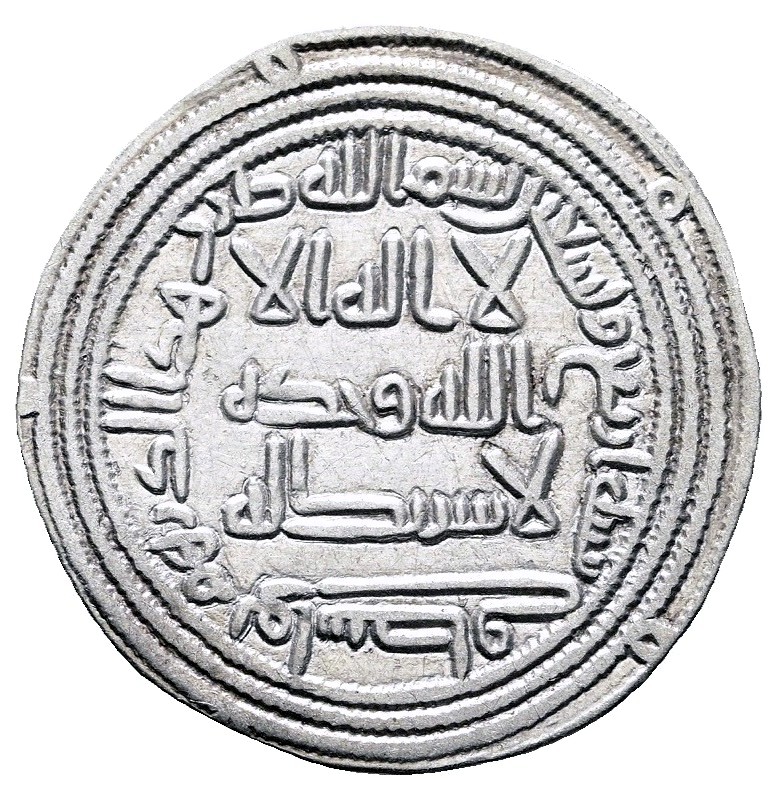
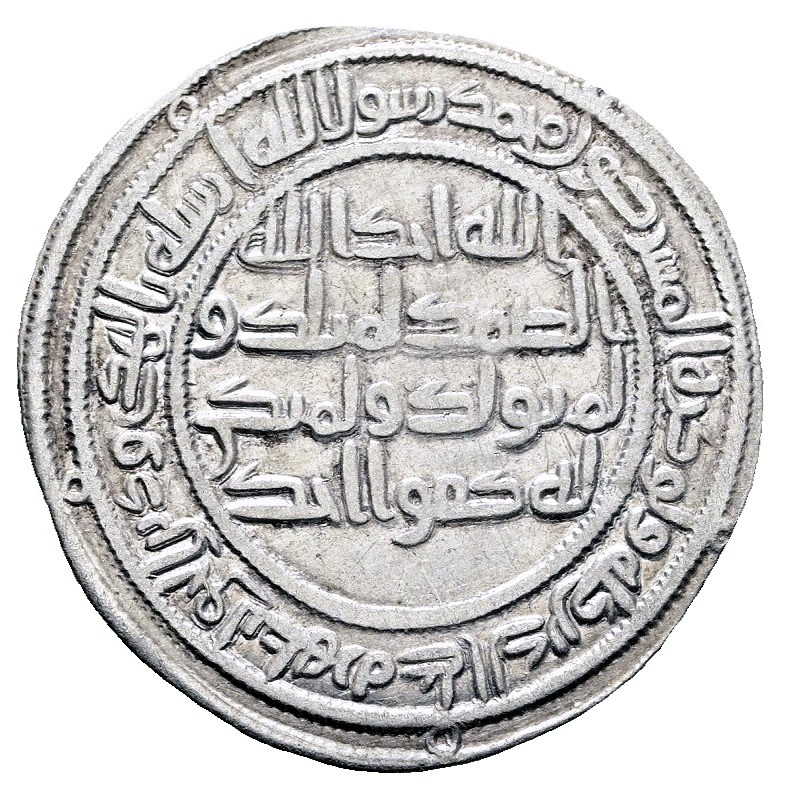
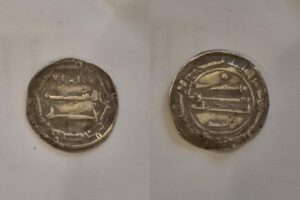
House of Emirates® in London is delighted to present this remarkable Umayyad silver dirham of Caliph Al-Walid I, struck at the important Wasit mint in 94 AH (712–713 AD). Dating from one of the most consequential periods of early Islamic history, this approximately 1,300-year-old silver coin represents the highly standardized monetary system established under the Umayyad Caliphate. Al-Walid I ruled from 86–96 AH (705–715 AD) and presided over an era of considerable territorial expansion, architectural development and administrative consolidation.
The Wasit mint, located in present-day Iraq, was one of the principal mints of the Umayyad monetary system, producing silver dirhams that circulated extensively across the Islamic world. Museum and numismatic records independently document 94 AH Wasit dirhams of Al-Walid I, including examples with comparable dimensions and inscriptions. With a diameter of approximately 26 mm and a weight of 2.62 g, this ancient Islamic silver coin offers investors an exceptional tangible connection to the early centuries of Islamic civilization.
The design is characteristic of the celebrated post-reform Umayyad dirham coinage, introduced following the monetary reforms of Al-Walid’s father, Caliph Abd al-Malik. Rather than depicting a ruler or portrait, the coin communicates authority through elegant Arabic calligraphy and religious declarations. The obverse carries the central profession of Islamic monotheism, “There is no deity except Allah alone; He has no equal,” surrounded by the minting formula identifying the coin as a dirham struck at Wasit in the year 94 AH.
The reverse presents the powerful Qur’anic declaration from Surah Al-Ikhlas, affirming the oneness and eternity of God, accompanied by the inscription identifying Muhammad as the Messenger of Allah. These inscriptions are not merely decorative: they reflect the distinctive ideological character of early Islamic coinage, in which calligraphy replaced the imperial portraits and religious imagery commonly encountered on earlier Byzantine and Sasanian currency. Comparable 94 AH Wasit dirhams held in institutional collections preserve the same fundamental inscriptions and monetary design.
For investors in ancient coins, Islamic silver coins, Umayyad coinage, early Islamic antiquities and historic precious-metal assets, this Al-Walid I dirham represents a fascinating intersection of history, artistry and tangible silver. Wasit itself was an important administrative and commercial centre in Iraq, and its coinage provides direct material evidence of the sophisticated monetary infrastructure of the early Umayyad state.
Struck more than thirteen centuries ago, the coin carries Arabic inscriptions that remain legible today, allowing the modern investor to encounter an authentic monetary artifact from the formative age of Islamic civilization. The combination of Al-Walid I, Wasit mint, 94 AH, 712–713 AD, silver dirham and early Islamic Kufic-style calligraphy makes this an especially compelling addition to a collection of historic monetary treasures. With its compact 26 mm format, 2.62 g silver weight, ancient origin and unmistakable Umayyad identity, this coin embodies the enduring appeal of tangible historical assets—where precious metal, archaeology and the history of civilization converge. House of Emirates® presents it as an extraordinary ancient Islamic silver coin and Umayyad numismatic treasure, preserved across thirteen centuries and offered to today’s sophisticated investors seeking authentic pieces of monetary history.