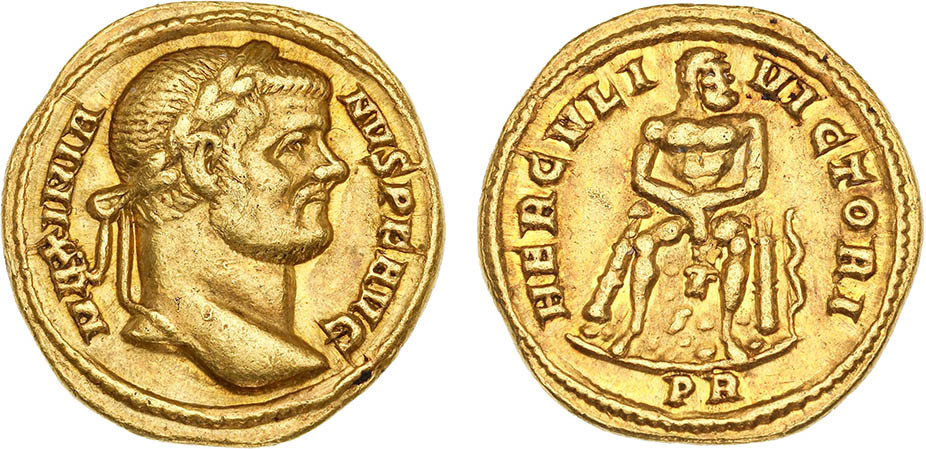
By: House of Emirates® Coins Store
In an investment world shaped by market volatility and inflation concerns. Currency fluctuations and uncertainty influence behavior. Sophisticated collectors and alternative-asset investors seek tangible stores of value beyond traditional investments. Ancient coins are among the most fascinating options. Roman coins, in particular, combine rarity, history, artistry, and collect-ability in a small, portable asset.
For centuries, ancient Roman coins, Greek coins, Byzantine coins and Islamic coins have fascinated collectors, historians and investors. The market now shows strong demand for rare coins and ancient coins for sale. Collectible coins often attract premium prices.
The appeal of Roman coins goes far beyond their precious-metal content. They are surviving artifacts from one of history’s greatest civilizations. For the right collector or investor, they can represent an intriguing alternative investment.
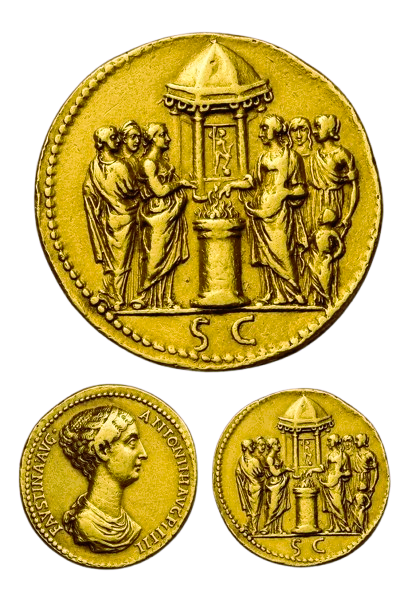
Roman coinage offers an extraordinary historical record. From the Roman Republic through Late Antiquity, coins were produced in enormous numbers. They circulated across Europe, North Africa, the Middle East, and parts of Asia.
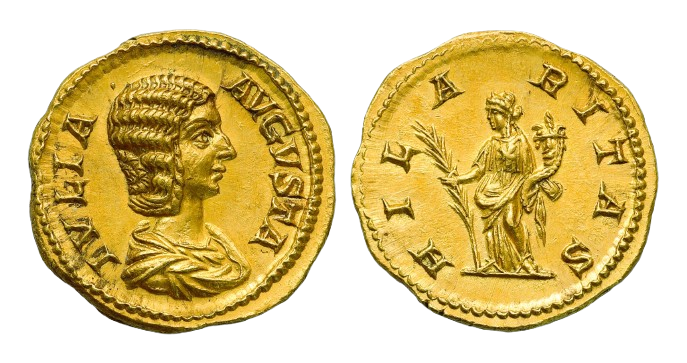
A coin, such as a Roman denarius, Roman aureus, Roman sestertius, Roman antoninianus, or Roman solidus, can carry the portrait of an emperor. The emperor’s name remains familiar more than 1,500 or 2,000 years later.
Collectors search for coins associated with legendary figures such as Julius Caesar, Augustus, Nero, Vespasian, Hadrian, Marcus Aurelius, Constantine the Great and Diocletian. Many collectors seek coins that depict Roman gods, military victories, temples, ships, animals, and important historical events.
The result is a market where every coin can tell a story.
Professional numismatic references also highlight the particular attraction of Roman coinage: collectors often value the portraits of rulers and the historical events represented on Roman coins.
One of the most important principles in the rare coin investment market is scarcity.
Genuinely ancient coins exist as finite historical objects, while contemporary monetary policy shapes modern currencies. Every surviving Roman coin represents a piece of material history that has survived wars, political upheaval, economic changes, burial, environmental damage and centuries of human activity.
However, age alone does not automatically make a coin valuable.
The strongest examples are generally distinguished by a combination of rarity, condition, historical importance, eye appeal, denomination, mint, emperor, inscriptions, metal and provenance.
This is why a common Roman denarius may be relatively affordable while an exceptionally rare Roman gold aureus connected to an important historical event can command a substantial premium.
The same principle applies throughout the ancient coin market, including ancient Greek coins, Hellenistic coins, Byzantine coins and ancient Islamic coins.
For investors accustomed to stocks, bonds, property and other financial assets, ancient coins provide something fundamentally different: physical ownership of a historical object.
A rare Roman coin does not depend on a company’s quarterly earnings, a stock-market index or the performance of a particular technology platform. Its value is influenced primarily by the numismatic market, collector demand, rarity, condition, historical importance and provenance.
This makes rare ancient coins interesting to people seeking diversification through tangible collectible assets.
Ancient coins are also exceptionally portable. A valuable historical coin can represent considerable financial value while occupying only a few centimeters of physical space. Properly stored and protected, a collection can be maintained privately and passed from one generation to another.
Nevertheless, ancient coins should be regarded as collectibles and alternative assets rather than guaranteed investments. Prices can fluctuate, liquidity varies considerably between coins, and transaction costs can affect returns.
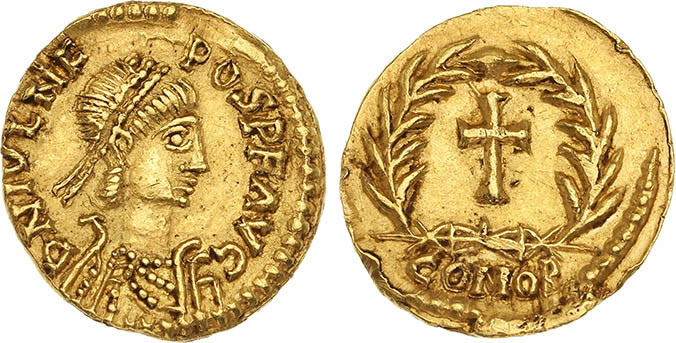
The world of ancient coins extends far beyond Rome.
Ancient Greek coins are particularly admired for their extraordinary artistic quality. Athenian tetradrachms, Alexander the Great tetradrachms, Greek silver staters and Hellenistic coinage offer investors and collectors access to some of the finest miniature artworks produced in antiquity.
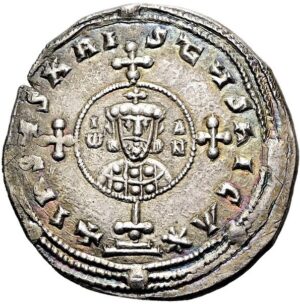
Byzantine coins provide another fascinating continuation of Roman monetary history. Byzantine gold solidus, silver issues and large copper follies connect collectors with emperors such as Justinian I, Heraclius and Basil II. Their historical importance and distinctive designs make Byzantine coin collecting an increasingly fascinating specialist field.
Then there is the remarkable world of Islamic coins.
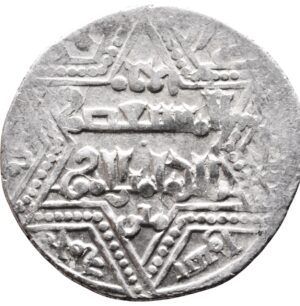
Ancient and medieval Islamic coinage—including Umayyad gold dinars, Abbasid dinars, Islamic dirhams and medieval Islamic silver coins—provides a remarkable record of the Islamic Golden Age and the development of monetary systems across the Middle East, North Africa and Central Asia.
Together, Roman, Greek, Byzantine and Islamic coins form one of the world’s most fascinating categories of historical collectibles.
Anyone considering buying ancient coins should place authenticity at the top of the priority list.
The ancient coin market contains genuine masterpieces, but it also contains replicas and forgeries. Buyers should therefore consider the reputation of the dealer, available provenance, authentication practices, descriptions and guarantees before purchasing.
A trustworthy ancient coin dealer should provide clear information about the coin’s attribution, denomination, ruler, mint, date, metal and condition wherever possible.
This is particularly important when purchasing rare Roman coins, ancient gold coins, Greek silver coins, Byzantine gold coins or Islamic dinars.
Collectors and investors seeking carefully selected historical coinage will find House of Emirates® a specialist destination. It offers ancient coins, Roman coins, Greek coins, Byzantine coins, and Islamic coins.
The House of Emirates® collection focuses on exceptional historical pieces selected for their rarity, authenticity, historical significance, condition and collector appeal. Its approach combines the passion of traditional numismatics with the growing international interest in tangible alternative assets.
For the discerning buyer, purchasing an ancient coin is not simply about acquiring an object. It is about acquiring a fragment of history.
Perhaps the greatest appeal of Roman coins is something that cannot be measured on a spreadsheet.
When you hold an ancient Roman denarius, you are holding an object that circulated during an entirely different world. It may have passed through the hands of merchants, soldiers, officials or ordinary citizens of the Roman Empire. Its portrait may depict an emperor who shaped the course of European and Mediterranean history.
That combination of scarcity, history, artistry, portability and collect-ability gives ancient coins a unique position among alternative investments.
For investors seeking diversification, and collectors seeking something far more meaningful than a conventional financial asset, Roman coins and other ancient coins represent an extraordinary intersection of history and value.
The finest ancient coins are not merely pieces of metal.
They are surviving witnesses to civilizations that disappeared centuries ago—and, when carefully selected, they can become both treasured collectibles and compelling tangible alternative assets.