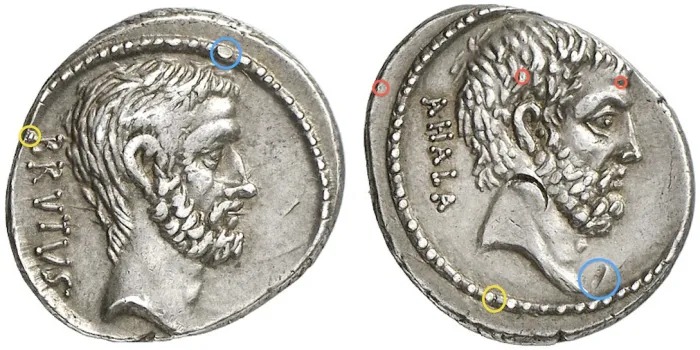
There is something uniquely captivating about holding an ancient coin in your hand.
A small piece of gold, silver, or bronze can carry the portrait of a forgotten ruler. It may also bear the name of an ancient city and a history spanning centuries.
Authentication: How to Spot a Fake Ancient Coin helps readers verify authenticity.
But there is another side to the ancient coin market: counterfeits.
For collectors and investors seeking ancient coins for sale, Authentication: How to Spot a Fake Ancient Coin helps assess authenticity. Modern counterfeiters have become increasingly sophisticated. They create fake Roman coins, Greek coins, Islamic coins. These fakes can look convincing at first glance.
Investors should use established evaluation methods and trusted sources to avoid paying for fakes. Consult dealer reputations, compare details, and verify provenance through multiple records. Stay cautious of unusually low prices and unusual payment schemes. When in doubt, hire a professional appraiser.
So, how can you spot a fake ancient coin?
New collectors often make a big mistake by assuming a coin is genuine simply because it looks old. Moreover, a convincing fake can have artificial patina and realistic wear, which can fool casual observers. A genuine assessment requires more than appearance.
It may show ancient-looking dirt, and carefully reproduced inscriptions. Therefore, authentication should never depend on a single feature. Other signs, like weight, edge marks, and the context in which it was found, support a more reliable judgment. This helps distinguish modern fakes from genuine ancient pieces.
Instead, experienced collectors examine the entire coin: its design, weight, dimensions, metal, surfaces, edges, production method, provenance, and comparison with known genuine examples.
Think of authentication as putting together a historical puzzle. Every piece should make sense.
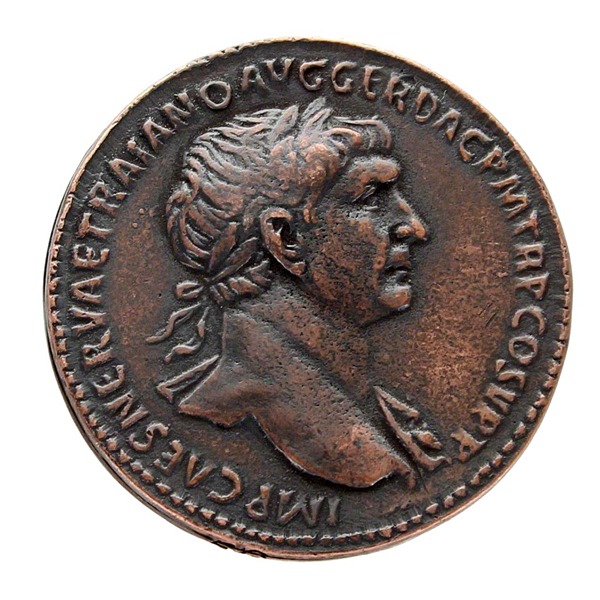
Start by looking closely at the portrait, lettering, symbols, borders, and overall style.
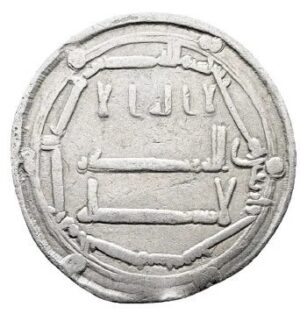
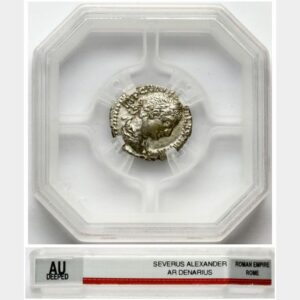
Ancient coins were produced by different civilizations and mints, each with distinctive artistic traditions. A Roman denarius should look like a Roman denarius. A Greek drachma should reflect the artistic style of its period and mint. An Islamic gold dinar should display inscriptions and calligraphy appropriate to its historical era.
Pay particular attention to lettering.
Fake ancient coins sometimes contain letters that appear too modern, too smooth, incorrectly shaped, or inconsistent with genuine examples. A portrait may also look slightly unnatural or lack the distinctive characteristics found on authenticated coins of the same type.
Comparing your coin with museum examples, specialist references, auction records, and reputable numismatic publications can reveal differences that are difficult to notice otherwise.
One of the simplest and most useful authentication techniques is also one of the most overlooked: weigh the coin. Ancient monetary systems generally followed established weight standards. Roman, Greek, Byzantine, Persian, and Islamic coins were normally produced according to specific denominations and weight ranges.
A coin that is dramatically heavier or lighter than expected deserves further investigation.
However, weight alone does not prove authenticity. Ancient coins circulated for generations and could be clipped, worn, damaged, corroded, or lose small amounts of metal over time.
The best approach is to compare the coin’s weight and diameter with reliable examples of the exact denomination and type.
Now look at the coin under good lighting.
Genuine ancient coins often have complex surfaces created by centuries of circulation, burial, oxidation, cleaning, and environmental exposure. Their patina and wear can vary considerably.
A fake may sometimes display an unnaturally uniform surface or artificial patina designed to make a modern object appear ancient. But be careful: experienced counterfeiters can create remarkably convincing surfaces.
Likewise, a strange-looking surface does not automatically mean a coin is fake. Genuine ancient coins can have unusual corrosion, deposits, scratches, cleaning marks, and other imperfections.
The key is to look at the complete combination of characteristics.
When examining an ancient coin, many people focus entirely on the obverse and reverse and completely ignore the edge.
That can be a mistake.
The edge can provide valuable clues about how a coin was manufactured. Some cast counterfeit coins may show seams or other evidence associated with mold production. Modern tooling, filing, or unnatural edge characteristics can also warrant closer investigation.
A genuine ancient coin does not necessarily have a perfect edge. In fact, irregularities are common. What matters is whether the edge is consistent with the manufacturing technology and historical period of the coin.
One common method of producing fake ancient coins involves casting a modern copy from an existing coin.
Casting can sometimes create distinctive characteristics such as softened details, rounded lettering, unusual depressions, or tiny surface bubbles.
Modern counterfeiters may also use advanced striking techniques to produce replicas that appear much closer to genuine ancient coins.
This is why ancient coin identification requires experience. The more genuine coins you study, the easier it becomes to recognize the subtle differences between authentic ancient workmanship and modern reproduction.
Another important factor in ancient coin authentication is provenance.
Where did the coin come from?
Does it have an established collection history? Has it appeared in an established auction? Was it previously sold by a respected specialist dealer? Is there documentation supporting its history?
Strong provenance does not automatically guarantee authenticity, but it can provide valuable supporting evidence. Conversely, a supposedly rare ancient coin with an extraordinary story but absolutely no documentation should be approached carefully.
Imagine finding a supposedly rare ancient gold coin online for a tiny fraction of its expected market value.
It may be a fantastic bargain.
But it may also be a warning sign.
Rare ancient coins command strong prices because of their historical importance, rarity, condition, provenance, and collector demand. If a seller is offering an exceptionally rare coin at an unbelievably low price, take the time to investigate before purchasing.
When buying ancient coins online, the reputation of the seller matters enormously.
For an inexpensive ancient coin purchased as a learning piece, basic research may be sufficient.
For a rare ancient gold coin, valuable Roman coin, important Greek coin, or historically significant Islamic coin, professional authentication is a much better approach. Experienced numismatists can compare the coin against known genuine examples and evaluate its style, fabric, weight, manufacture, surfaces, and provenance. In certain cases, scientific analysis can provide additional evidence about the metal and manufacturing process.
Learning how to spot a fake ancient coin is one of the most valuable skills any ancient coin collector can develop.
Don’t rely on one test. Examine the design. Check the weight. Study the surface. Inspect the edge. Research the provenance. Compare the coin with authenticated examples. Most importantly, purchase valuable ancient coins from reputable and established sources.
Whether your passion is Roman coins, Greek coins, Byzantine coins, Islamic gold dinars, ancient silver coins, ancient bronze coins, or rare ancient currency, authentication protects more than your money.
It protects history.
Every genuine ancient coin is a surviving connection to another civilization, another ruler, and another era. Learning to distinguish an authentic ancient coin from a modern counterfeit helps ensure that the piece you add to your collection is not merely an attractive object—but a genuine piece of the ancient world.